Showing posts with label Methane hydrates. Show all posts

PNAS: Tipping Elements in the Earth System: How Stable is the Contemporary Environment?

Tipping Elements in the Earth System: How Stable is the Contemporary Environment?

12/08/2009 – A Special Feature of the “Proceedings of the National Academy of Sciences” presents the latest scientific insights on so-called tipping elements in the planetary environment. These elements have been identified as the most vulnerable large-scale components of the Earth System that may be profoundly altered by human interference. If one or more of those components is tipped – especially in the course of global warming – then the age of remarkably stable environmental conditions on Earth throughout the Holocene may end quickly and irreversibly.
image_miniPNAS Cover image. Images: glacier courtesy of Ulrich Heim (Luebeck, Germany), methane bubbles courtesy of Alfred Wegener Institute, dust cloud courtesy of NASA, and Amazon rainforest courtesy of Greenpeace
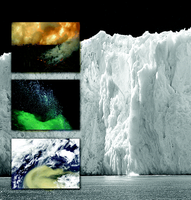
This Special Feature of one of the leading research journals in the world was designed and edited by Hans Joachim Schellnhuber of the Potsdam Institute for Climate Impact Research (PIK). It is meant to make a major contribution to the emerging field of sustainability science. The authors involved analyse altogether eight Earth System components. Three of them, the biggest dust source on our planet, oceanic biogeochemical cycles, and marine methane hydrates, are discussed in depth as potential tipping elements for the first time ever.

“It is the cardinal question of Earth System and sustainability science whether global warming actually triggers singular transformations of crucial components of the planetary machinery,” says Schellnhuber. Singular transformations – as opposed to smooth linear and nonlinear ones – would dramatically alter the environment in which human civilisations have developed and thrived over many millennia. “Currently, the climate system still operates in the Holocene mode, but the research presented here underlines that a rise of the global mean temperature beyond two degrees Celsius might push the world into singular-change terrain and therefore needs to be avoided,” Schellnhuber adds.

The PIK scientist has introduced the tipping-elements concept into the research community some ten years ago. It describes components of the Earth System that could be pushed past critical thresholds by anthropogenic forcing, so that they may “tip” into qualitatively different modes of operation. In a recent seminal paper, Tim Lenton from the University of East Anglia, Hans Joachim Schellnhuber and an international group of colleagues presented a formal definition and compiled a short-list of the nine tipping elements ranked as the most policy-relevant (see related Press Release). The current Special Feature examines five of these in much more depth: the El Niño/Southern Oscillation phenomenon, Arctic sea-ice and the great polar ice sheets, the Amazon rainforest, the major monsoon systems, and the circulation of ocean currents in the Atlantic Ocean.

In their article, Matthias Hofmann and Stefan Rahmstorf, also from PIK, discuss the last topic, i.e. the stability properties of the Atlantic Meridional Overturning Circulation (AMOC). The authors present new model simulations of the AMOC response to increased freshwater inflow into the North Atlantic. These challenge the hypothesis that the resulting circulation weakening and the possibility of abrupt oceanic change are just artefacts arising from model flaws. Rather, improving the physical realism of the model leads to a greater vulnerability of the projected AMOC stability.

A group of PIK scientists led by Anders Levermann show that every monsoon circulation inherently bears the possibility of an abrupt collapse. The reason is the moisture-advection feedback which is the core of any monsoon system and was captured in a conceptual model by the authors. The monsoon rains are essential for agriculture as the source of livelihood for several hundred million people in the pertinent regions, the authors state (see related Press Release).

David Archer from the University of Chicago and his co-authors provide evidence that methane hydrates in ocean sediments should be regarded as a “slow tipping element” in the Earth’s climate system. Global warming of some 3 °C could lead to the escape of more than half of the relevant methane stocks, estimated 940 billion tons of carbon, on a millennial time-scale. This hydrate leakage could cause an additional rise in planetary temperature by 0.5 °C. The authors tie this increase in global mean temperature to the methane, but it would persist through many millennia because methane is oxidised in about a decade to carbon dioxide, which continues to impact climate for many millennia.

Ulf Riebesell and colleagues from the Leibniz Institute of Marine Sciences (IFM-GEOMAR) describe the oceans as a climate-system component which is presently undergoing major changes. The sea is not only warming, it is also becoming more acidic. Unbridled anthropogenic emissions of greenhouse gases could alter the cycling of carbon and nutrients in the surface ocean and might damage entire marine ecosystems. The authors conclude that the current level of knowledge allows no clear answer on whether tipping points in the marine ecosphere exist, but they regard some of the projected shifts in oceanic biogeochemistry and their impacts as severe.

Mojib Latif and Noel Keenlyside, also of IFM-GEOMAR, present a review of the complicated mechanisms ruling the El Niño/Southern Oscillation (ENSO) phenomenon. It leads to strong temperature and precipitation fluctuations in the Equatorial Pacific from one year to another and has widespread effects on the global climate system. However, current climate models cannot capture the potential tipping point behaviour of the ENSO phenomenon, the authors resume. Given the potentially huge impacts on biological, chemical and socio-economic systems, the question whether global warming will fundamentally alter the ENSO dynamics in the future has to be investigated further.
image_mini2Tipping element Bodélé Depression: The immense dust storm was imaged in a series of overpasses by the NASA’s Aqua satellite. Image courtesy Jacques Descloitres, MODIS Rapid Response Team, NASA-Goddard Space Flight Center
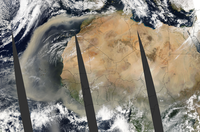
A research team led by Richard Washington from the University of Oxford qualifies the biggest dust source on our planet, the Bodélé Depression in Chad, as a potential tipping element. This area in the southern Sahara releases huge plumes, which carry about 700,000 tons of dust towards the Atlantic and the Amazon basin. The authors explain that the so-deployed mineral aerosols play a vital role in transcontinental climatic and biophysical feedbacks. If regional wind patterns or surface erosivities changed due to anthropogenic interference, the dust export from the Bodélé Depression could be substantially modified at time scales as small as one season.

A research team headed by Yadvinder Malhi, also of the University of Oxford, has employed nineteen different global climate models to investigate, whether climate change could cause a large-scale dieback of Amazonian rainforest. The analysis based on a scenario with continuously increasing global emissions of greenhouse gases over the 21st century suggests that dry season water stress is likely to increase in parts of Amazonia. The researchers provide evidence that the Amazonian rainforest could reveal characteristic properties of a tipping element with the tendency to change into a seasonal forest.

In his paper on potential threshold behaviour of sea-ice and continental ice-sheets, Dirk Notz of the Max Planck Institute for Meteorology concludes that tipping points more likely exist for the loss of the Greenland ice sheet and the West-Antarctic ice sheet than for the loss of Arctic sea-ice, which could recover rapidly in a cooler climate. Inland ice could be much more vulnerable to regional warming due to the lack of large internal stabilizing feedbacks as existing for the Arctic sea-ice dynamics. Melting of the continental ice-sheets could lead to rapid multi-meter rise in mean sea level over the coming centuries.

Finally, Nobel Laureate Mario Molina and his co-authors demand fast action from political and economic decision makers to avoid activation of tipping elements. They propose to strengthen the Montreal Protocol regarding substances that have high global-warming potentials. In particular, the scientists make strong cases for an accelerated phasing out of hydrochlorofluorocarbons and a massive reduction of the emissions of soot.
“After two decades of failed climate protection since the 1990 IPCC Report it is more doubtful than ever whether society will manage to confine global environmental change to sub-dangerous levels,” says Hans Joachim Schellnhuber. The tipping-elements field is developing quickly into a broad and relevant research frontier domain, but the issues pose tough challenges for contemporary science. Practically none of the planetary cases studied can be either dismissed now – by firmly ruling out a possible anthropogenic triggering of irregular dynamics – or settled by providing reliable estimates for activation temperatures and reaction time scales. “Many of the papers sketch the research way forward, but it seems that we will have to live with at least another decade of tantalising ignorance concerning the most worrying potential impacts of global warming,” says Schellnhuber.

Article: Hans Joachim Schellnhuber (2009) Tipping Elements in Earth Systems Special Feature: Tipping elements in the Earth System. PNAS published online before print December 7, 2009, doi:10.1073/pnas.0911106106

Further reading:
Related Press Release by the Institute for Governance & Sustainable Development http://igsd.org/documents/PR_PNASSpecialFeature_7Dec09.pdf (pdf-file, 67 KB)

Methane, the ticking time bomb, will go off!

Methane the ticking time bomb will go off!
katey Walter Anthony 
Katey Walter Anthony, aquatic ecologist and biogeochemist

I have been watching the work of this young scientist for sometime. Much of her research into methane releases presently being emitted from the thawing permafrost and bubbling from lakes in the far north of Alaska has passed under the radar of climate change discussions. This is very troubling as you’ll note that what is happening is not included in the IPCC models for upper levels of atmospheric concentrates of heat trapping greenhouse gases. Katey Walter Anthony’s work is detailed in the book ZERO Greenhouse Emissions and she is also featured in the Letters from 2030 series here.

I highly recommend we all start paying more attention to her work! Following is a recent article in National Geographic.

“It’s a worldwide responsibility to reduce our carbon footprint and its effects on the atmosphere. We’re researching the greenhouse gas that could have the most powerful affect of all on global warming.”

Deep below the glistening surface of a frozen Arctic lake, something is bubbling—something that could cause global warming to accelerate beyond all previous projections. Dr. Katey Walter Anthony steps onto the ice, to tell us why.

“The bubbles are methane, a strong greenhouse gas that’s 25 times more powerful than carbon dioxide,” Walter Anthony explains. It’s being released at an accelerating rate from thawing permafrost, frozen soil that holds vast amounts of carbon. When the Earth’s rising temperatures cause it to suddenly thaw, lakes form. “All that carbon was locked up safely in the permafrost freezer for tens of thousands of years,” Walter Anthony says. “Now the freezer door is opening, releasing the carbon into Arctic lake bottoms. Microbes digest it, convert it to methane, and the lakes essentially burp out methane.”


Scientists estimate that permafrost holds up to 950 billion tons of carbon. As it thaws, 50 billion tons of methane could enter the atmosphere from Siberian lakes alone. “That’s ten times more methane than the atmosphere holds right now,” Walter Anthony notes. “Since methane traps heat so efficiently, temperatures will rise higher, faster.” In the atmosphere methane spreads rapidly too, circling the globe in just one year.

Walter Anthony’s research in Alaska and Russia explores this dangerous, self-perpetuating cycle: thawing permafrost caused by global warming releases methane, which contributes to global warming. The bubbles she observes in the wilds of Siberia will soon be felt by the entire planet.

Walter Anthony’s comparative measurements of the speed of permafrost thaw and level of methane release reveal some Alaskan lakes eating into permafrost with exceptional speed. “We need to determine if this represents the near future of other regions like Siberia,” she says. Her data feed into scientific models that help predict global warming and ultimately inspire ideas to reduce it.

It’s a good thing Walter Anthony loves the solitude and stark beauty of Arctic landscapes. Her fieldwork is wet, risky, and very, very cold. “Just when temperatures dive, snow starts piling up, and everyone heads inside, we pack up our tents and go camping,” she smiles. Some areas she visits have been dubbed “drunken forests”—places where thawing permafrost has transformed woodlands into soggy wetlands dotted with dead and dying trees tilting at haphazard angles. “We get up in the morning, put on frozen-stiff clothes, and venture out onto thin lake ice,” she describes.

After shoveling off snow, Walter Anthony’s team hacks open holes in the ice and lowers plastic bubble traps into the water. “A valve allows us to take a sample and bring it back for lab analysis,” she says. But for on-the-spot confirmation of gas contents, Walter Anthony strikes a match. When flames leap—often as high as trees—she’s found methane.

Does the methane that threatens world climate have a silver lining? Walter Anthony seeks ways to harness it as an alternative energy source. “Capturing and burning it has already been done around the world on a small scale,” she says. Soaring over Alaska in a small plane, she looks for ways to fuel an entire village. “We knew methane seeps existed in this particular area, but weren’t sure where.” An aerial view revealed “fantastic seeps that looked like clusters of black grapes against the white snow. After landing we went out in snow machines, racing across the tundra to locate them.” Now her research and economic feasibility studies determine how to most efficiently bring the gas to the village for power and heat. “People living there would love to have local methane solve their energy crisis.”

Walter Anthony’s connection with Siberian people and places began when she was a high school exchange student and continued when she was a university graduate student in a far north science station. “Russian scientists led the way in connecting thawing permafrost with methane release. I really came to love and admire the people and country. Now, my long-term understanding of the unique capabilities of these scientists helps me arrange collaborations between Alaska and Russia to monitor climate change,” she says.

“I feel such a strong emotional tie with these extreme remote places. People who can last here love it. We chop firewood, collect berries, and fish. I like preserving those relationships with the land. When life is a little bit hard, it makes you appreciate the times you can come in and have a cup of soup.”

Link:  http://greenhouseneutralfoundation.org/articles/2009/11/22/methane-the-ticking-time-bomb-will-go-off/

Scientific American (December 2009), "Methane -- A Menace Surfaces" by Katey Walter Anthony

Scientific American Magazine, December 2009

Methane: A Menace Surfaces 

by Katey Walter Anthony

Touchdown on the gravel runway at Cherskii in remote northeastern Siberia sent the steel toe of a rubber boot into my buttocks. The shoe had sprung free from gear stuffed between me and my three colleagues packed into a tiny prop plane. This was the last leg of my research team’s five-day journey from the University of Alaska Fairbanks across Russia to the Northeast Science Station in the land of a million lakes, which we were revisiting as part of our ongoing efforts to monitor a stirring giant that could greatly speed up global warming.

These expeditions help us to understand how much of the perennially frozen ground, known as permafrost, in Siberia and across the Arctic is thawing, or close to thawing, and how much methane the process could generate. The question grips us—and many scientists and policy makers—because methane is a potent greenhouse gas, packing 25 times more heating power, molecule for molecule, than carbon dioxide. If the permafrost thaws rapidly because of global warming worldwide, the planet could get hotter more quickly than most models now predict. Our data, combined with complementary analyses by others, are revealing troubling trends.

[you can read the rest if you have a subscription or buy the issue -- hint, hint, somebody please send me a copy of this article if possible]

Link:  http://www.sciamdigital.com/index.cfm?fa=Products.ViewIssuePreview&ARTICLEID_CHAR=07A9A210-237D-9F22-E8B42A4D79A6EAAE

A. Shiklomanov: A general increase of river discharge to the Arctic Ocean from Eurasia; 30% higher than average in 2007

Dear Readers,

For those who might not realize the implications of increased flow from rivers that empty into the Arctic Sea, permit me to provide some background in my usual non-scientific language.

OK, in areas where there is no permafrost, we have "groundwater" under the ground, right?  This can be quite close to the surface or even very deep as in an aquifer. It flows somewhere, following gravity and the path of least resistance.  Some of it stays underground once it finds its way to a deep area like an aquifer, or it keeps flowing until it reaches streams and rivers.

In areas where there is permafrost, which is usually quite deep, the water is frozen in the ground and doesn't flow anywhere.

But, what can we imagine will occur when the permafrost is no longer "perma"?  Hmm...

Indeed, permafrost is warming up in the regions all around the Arctic Sea, to the point that groundwater is now flowing to the rivers.

This has consequences.  The surface water in the Artic Sea becomes less saline.  And good ol' methane is being released by the permafrost, and as this process continues, the land subsides.  It becomes a big mushy mess basically not good for anything.  Buildings fall over, roads sink, gas belches out of the thermokarst lakes.  The warming in the Arctic amplifies.

River Discharge
A. Shiklomanov
University of New Hampshire, Durham, NH
August 27, 2009

A general increase of river discharge to the Arctic Ocean from Eurasia was observed over the period 1936-2007, with a rate of annual change (defined from the linear trend) of 2.7 ± 0.5 km3/year (Fig. R1). The most pronounced positive (increasing) trend for the six largest Eurasian rivers is observed during the last 21 years (1987-2007), at a rate of 11.8 km3/year. The rate of discharge has continued to increase in the 21st century. The mean 2000-2007 discharge was 171 km3 higher (10%) than the long-term average over the period 1936-1999. A new historical maximum for Eurasian river discharge to the Arctic Ocean was observed in 2007, reaching 2250 km3/year or 30% higher than the long-term mean discharge from 1936-1999, reported in Peterson et al. (2002).
annual river discharge

Figure R1. Total annual river discharge to the Arctic Ocean from the six largest rivers in the Eurasian Arctic for the observational period 1936-2007 (updated from Peterson et al., 2002) (red line) and from the five large North American pan-Arctic rivers over 1973-2006 (blue line). The least squares linear trend lines are shown as dashed lines. Provisional estimates of annual discharge for the six major Eurasian Arctic rivers based on near real time data from http://RIMS.unh.edu are shown as red diamonds.

The mean annual discharge to the ocean over 2000-2007 from the 5 large North American Arctic rivers based on data from the Environment Canada and USGS was about 6% (31 km3) greater than the long-term mean from 1973-1999. The river discharge during 2007 was higher than the long-term mean and, taking into account that this year had extremely high fresh water discharge from Greenland (Mernild et al., 2009), we can estimate that 2007 showed record high total freshwater input to the Arctic Ocean from the terrestrial land surface.

Official river discharge data are usually processed and published with some delay, the longest delay often being associated with rivers in cold regions that are ice covered for extended periods (Shiklomanov et al. 2006). To provide for more timely detection and diagnosis of changing conditions, a method to estimate near-real time river discharge from the most important Russian monitoring sites, based on provisional stage measurements and river ice data, has been developed in cooperation with the Arctic and Antarctic Research Institute (AARI) (http://RIMS.unh.edu). The provisional estimates over 2003-2007 show a tendency to underestimate the annual observed values within an error of 5% of the officially released data (Figure R1). The preliminary estimate of annual river discharge to the Arctic Ocean from the major Russian rivers in 2008 was significantly greater than the long-term mean but lower than the historical maximum observed in 2007. The North American annual river discharge to the Arctic Ocean in 2008 was probably close to or slightly higher than the long-term mean. However, this estimate is much less reliable due to gaps in near real time discharge data for major North American rivers.

References
Mernild, S. H., G. E. Liston, C. A. Hiemstra, and K. Steffen, 2009: Record 2007 Greenland Ice Sheet surface melt extent and runoff. Eos, Trans. Amer. Geophys. Union, 90, doi:10.1029/2009EO020002.
Peterson, B. J., R. M. Holmes, J. W. McClelland, C. J. Vorosmarty, R. B. Lammers, A. I. Shiklomanov, I. A. Shiklomanov, and S. Rahmstorf, 2002: Increasing river discharge to the Arctic Ocean. Science, 298, 2171-2173.
Shiklomanov A. I., T. I. Yakovleva , R. B. Lammers, I. Ph. Karasev, C. J. Vörösmarty, and E. Linder, 2006: Cold region river discharge uncertainty - estimates from large Russian rivers. J. of Hydrol., 326, 231–256.

Dlugokencky et al., GRL (September 2009): Observational constraints on recent increases in the atmospheric CH4 burden

Geophysical Research Letters, 36 (2009) L18803; doi: 10.1029/2009GL039780.

Observational constraints on recent increases in the atmospheric CH4 burden 

 E. J. Dlugokencky, L. Bruhwiler (NOAA Earth System Research Laboratory, Boulder, CO, U.S.A.), J. W. C. White (INSTAAR, University of Colorado, Boulder, CO, U.S.A.), L. K. Emmons (National Center for Atmospheric Research, Boulder, CO, U.S.A.), P. C. Novelli, S. A. Montzka, K. A. Masarie, P. M. Lang, A. M. Crotwell, J. B. Miller (NOAA Earth System Research Laboratory, Boulder, CO, U.S.A.) and L. V. Gatti (Divisao de Quimica Ambiental, Laboratorio de Quimica Atmosferica, Insituto de Pesquisas Energéticas e Nucleares, São Paulo, Brazil )

Received 6 July 2009; accepted 18 August 2009; published 17 September 2009

Abstract

Measurements of atmospheric CH4 from air samples collected weekly at 46 remote surface sites show that, after a decade of near-zero growth, globally averaged atmospheric methane increased during 2007 and 2008. During 2007, CH4 increased by 8.3 ± 0.6 ppb. CH4 mole fractions averaged over polar northern latitudes and the Southern Hemisphere increased more than other zonally averaged regions. In 2008, globally averaged CH4 increased by 4.4 ± 0.6 ppb; the largest increase was in the tropics, while polar northern latitudes did not increase. Satellite and in situ CO observations suggest only a minor contribution to increased CH4 from biomass burning. The most likely drivers of the CH4 anomalies observed during 2007 and 2008 are anomalously high temperatures in the Arctic and greater than average precipitation in the tropics. Near-zero CH4 growth in the Arctic during 2008 suggests we have not yet activated strong climate feedbacks from permafrost and CH4 hydrates.

Dlugokencky, E. J., et al. (2009), Observational constraints on recent increases in the atmospheric CH4 burden, Geophys. Res. Lett., 36, L18803; doi: 10.1029/2009GL039780.

Link to abstract:  http://www.agu.org/pubs/crossref/2009/2009GL039780.shtml

NOAA: Unusual Arctic warmth, tropical wetness likely cause for methane increase, E. Dlugokencky et al., GRL

Unusual Arctic warmth, tropical wetness likely cause for methane increase

NOAA, September 25, 2009
Wetlands at the Parker River restoration site.

Wetlands at the Parker River restoration site. High resolution (Credit: NOAA)

Unusually high temperatures in the Arctic and heavy rains in the tropics likely drove a global increase in atmospheric methane in 2007 and 2008 after a decade of near-zero growth, according to a new study. Methane is the second most abundant greenhouse gas after carbon dioxide, albeit a distant second.

NOAA scientists and their colleagues analyzed measurements from 1983 to 2008 from air samples collected weekly at 46 surface locations around the world. Their findings will appear in the September 28 print edition of the American Geophysical Union’s Geophysical Research Letters and are available online now.

“At least three factors likely contributed to the methane increase,” said Ed Dlugokencky, a methane expert at NOAA’s Earth System Research Laboratory in Boulder, Colo. “It was very warm in the Arctic, there was some tropical forest burning, and there was increased rain in Indonesia and the Amazon.”

In the tropics, the scientists note, the increased rainfall resulted in longer periods of rainfall and larger wetland areas, allowing microbes to produce more methane. Starting in mid-2007, scientists noticed La Niña conditions beginning, waning and then intensifying in early 2008. This kind of climate condition typically brings wetter-than-normal conditions in some tropical regions and cooler sea surface temperatures in the central and eastern tropical Pacific Ocean. It can persist for as long as two years. In the United States, La Niña often signals drier-than-normal conditions in the Southwest and Central Plains regions, and wetter fall and winter seasons in the Pacific Northwest.

Observations from satellites and ground sites suggest that biomass burning – the burning of plant and other organic material that releases carbon dioxide and methane – contributed about 20% of the total methane released into the atmosphere in 2007.
A magnificent view of wetlands and tidal streams in the Ashe Island area.

A magnificent view of wetlands and tidal streams in the Ashe Island area. High resolution (Credit: NOAA)

However, during the scientists’ 2007 measurement of methane for northern wetland regions, including the Arctic, temperatures for the year were the warmest on record. This temperature increase coincided with the large jump in the amount of methane measured in that area.

Dlugokencky and his colleagues from the United States and Brazil note that while climate change can trigger a process which converts trapped carbon in permafrost to methane, as well as release methane embedded in Arctic hydrates – a compound formed with water - their observations “are not consistent with sustained changes there yet.”

Methane is typically created in oxygen-deprived environments, such as flooded wetlands, peat bogs, rice paddies, landfills, termite colonies, and the digestive tracts of cows and other ruminant animals. The gas also escapes during fossil fuel extraction and distribution and is emitted during fires.

Authors of the study are: E. Dlugokencky, L. Bruhwiler, P.C. Novelli, S. A. Montzka, K. A. Masarie, P. M. Lang, A.M. Crotwell, and J.B. Miller of NOAA’s Earth System Research Laboratory, Boulder, Colo.; J.W.C. White of the Institute of Arctic and Alpine Research, University of Colorado, Boulder, Colo.; L. K. Emmons of the National Center for Atmospheric Research, Boulder, Colo.; and L.V. Gatti of the Laboratorio de Quimica Atmosferica, Instituto de Pesquisas Energéticas e Nucleares, São Paulo, Brazil. Crotwell and Miller are also at the Cooperative Institute for Research in Environmental Sciences in Boulder, Colo. The paper is available online.

NOAA understands and predicts changes in the Earth's environment, from the depths of the ocean to the surface of the sun, and conserves and manages our coastal and marine resources.

Link:  http://www.noaanews.noaa.gov/stories2009/20090925_arctic.html

V. V. Petrenko et al., Science (2009) 324(5926): 14CH4 measurements in Greenland ice: Investigating last glacial termination CH4 sources

Science (24 April 2009), Vol. 324, No. 5926, pp. 506–508; DOI: 10.1126/science.1168909

Reports

14CH4 measurements in Greenland ice: Investigating last glacial termination CH4 sources

Vasilii V. Petrenko,1,*,** Andrew M. Smith,2 Edward J. Brook,3 Dave Lowe,4 Katja Riedel,4 Gordon Brailsford,4 Quan Hua,2 Hinrich Schaefer,4 Niels Reeh,5 Ray F. Weiss,1 David Etheridge,6 Jeffrey P. Severinghaus1

Abstract

The cause of a large increase of atmospheric methane concentration during the Younger Dryas–Preboreal abrupt climatic transition (~11,600 years ago) has been the subject of much debate. The carbon-14 (14C) content of methane (14CH4) should distinguish between wetland and clathrate contributions to this increase. We present measurements of 14CH4 in glacial ice, targeting this transition, performed by using ice samples obtained from an ablation site in west Greenland. Measured 14CH4 values were higher than predicted under any scenario. Sample 14CH4 appears to be elevated by direct cosmogenic 14C production in ice. 14C of CO was measured to better understand this process and correct the sample 14CH4. Corrected results suggest that wetland sources were likely responsible for the majority of the Younger Dryas–Preboreal CH4 rise.


1 Scripps Institution of Oceanography, University of California, San Diego, La Jolla, CA 92093, USA.
2 Australian Nuclear Science and Technology Organisation (ANSTO), Private Mail Box 1, Menai, NSW 2234, Australia.
3 Department of Geosciences, Oregon State University, Corvallis, OR 97331, USA.
4 National Institute of Water and Atmospheric Research Ltd., Post Office Box 14901, Kilbirnie, 301 Evans Bay Parade, Wellington, New Zealand.
5 DTU Space, National Space Institute, Technical University of Denmark, Ørsteds Plads, Building 348, DK-2800 Kongens Lyngby, Denmark.
6 Commonwealth Scientific and Industrial Research Organisation, Marine and Atmospheric Research, Private Mail Box 1, Aspendale, VIC 3195, Australia.

* Present address: Institute of Arctic and Alpine Research, University of Colorado, Boulder, CO 80309, USA.

**Correspondence e-mail: vasilii.petrenko@colorado.edu

Link to abstract:  http://www.sciencemag.org/cgi/content/abstract/324/5926/506

Charles J. Hanley: Climate trouble may be bubbling up in far north (methane hydrates in permafrost)

Climate trouble may be bubbling up in far north

by CHARLES J. HANLEY, AP Special Correspondent, August 31, 2009

MACKENZIE RIVER DELTA, Northwest Territories (AP) -- Only a squawk from a sandhill crane broke the Arctic silence - and a low gurgle of bubbles, a watery whisper of trouble repeated in countless spots around the polar world.

"On a calm day, you can see twenty or more 'seeps' out across this lake," said Canadian researcher Rob Bowen, sidling his small rubber boat up beside one of them. A tossed match would have set it ablaze.

"It's essentially pure methane."

Pure methane, gas bubbling up from underwater vents, escaping into northern skies, adds to the global-warming gases accumulating in the atmosphere. And pure methane escaping in the massive amounts known to be locked in the Arctic permafrost and seabed would spell a climate catastrophe.

Is such an unlocking under way?

Researchers say air temperatures here in northwest Canada, in Siberia and elsewhere in the Arctic have risen more than 2.5 °C (4.5 °F) since 1970 -- much faster than the global average. The summer thaw is reaching deeper into frozen soil, at a rate of 4 cm (1.5 inches) a year, and a further 7 °C (13 °F) temperature rise is possible this century, says the authoritative, U.N.-sponsored Intergovernmental Panel on Climate Change (IPCC).

In 2007, air monitors detected a rise in methane concentrations in the atmosphere, apparently from far northern sources. Russian researchers in Siberia expressed alarm, warning of a potential surge in the powerful greenhouse gas, additional warming of several degrees, and unpredictable consequences for Earth's climate.

Others say massive seeps of methane might take centuries. But the Russian scenario is disturbing enough to have led six U.S. national laboratories last year to launch a joint investigation of rapid methane release. And IPCC Chairman Rajendra Pachauri in July asked his scientific network to focus on "abrupt, irreversible climate change" from thawing permafrost.

The data will come from teams like one led by Scott Dallimore, who with Bowen and others pitched tents here on the remote, boggy fringe of North America, 2,200 kilometers (1,400 miles) from the North Pole, to learn more about seeps in the 25,000 lakes of this vast river delta.

A "puzzle," Dallimore calls it.

"Many factors are poorly studied, so we're really doing frontier science here," the Geological Survey of Canada scientist said. "There is a very large storehouse of greenhouse gases within the permafrost, and if that storehouse of greenhouse gases is fluxing to the surface, that's important to know. And it's important to know if that flux will change with time."

Permafrost, tundra soil frozen year-round and covering one-fifth of Earth's land surface, runs anywhere from 50-600 m (160-2,000 feet) deep in this region. Entombed in that freezer is carbon -- plant and animal matter accumulated through millennia.

As the soil thaws, these ancient deposits finally decompose, attacked by microbes, producing carbon dioxide and -- if in water -- methane. Both are greenhouse gases, but methane is many times more powerful in warming the atmosphere.

Researchers led by the University of Florida's Ted Schuur last year calculated that the top 3 meters (10 feet) of permafrost alone contain more carbon than is currently in the atmosphere.

"It's safe to say the surface permafrost, 3-5 meters, is at risk of thawing in the next 100 years," Schuur said by telephone from an Alaska research site. "It can't stay intact."

Methane also is present in another form, as hydrates -- ice-like formations deep underground and under the seabed in which methane molecules are trapped within crystals of frozen water. If warmed, the methane will escape.

Dallimore, who has long researched hydrates as energy sources, believes a breakdown of such huge undersea formations may have produced conical "hills" found offshore in the Beaufort Sea bed, some of them 40 m (more than 100 feet) high.

With underwater robots, he detected methane gas leaking from these seabed features, which resemble the strange hills ashore here that the Inuvialuit, or Eskimos, call "pingos." And because the coastal plain is subsiding and seas are rising from warming, more permafrost is being inundated, exposed to water warmer than the air.

The methane seeps that the Canadians were studying in the Mackenzie Delta, amid grassy islands, steel-gray lakes and summertime temperatures well above freezing, are saucer-like indentations just 10 m (30 feet) or so down on the lake bed.

The ultimate source of that gas -- hydrates, decomposition or older natural gas deposits -- is unclear, but Dallimore's immediate goal is quantifying the known emissions and finding the unknown.

With tent-like, instrument-laden enclosures they positioned over two seeps, each several meters (yards) wide, the researchers have determined they are emitting methane at a rate of up to 0.6 m³ (almost 1 cubic yard) per minute.

Dallimore's team is also monitoring the seeps with underwater listening devices, to assess whether seasonal change -- warming -- affects the emissions rate.

Even if the lake seeps are centuries old, Bowen said, the question is, "Will they be accelerated by recent changes?"

A second question: Are more seeps developing?

To begin answering that, Dallimore is working with German and Canadian specialists in aerial surveying, teams that will fly over swaths of Arctic terrain to detect methane "hot spots" via spectrometric imagery, instruments identifying chemicals by their signatures on the light spectrum.

Research crews are hard at work elsewhere, too, to get a handle on this possible planetary threat.

"I and others are trying to take field observations and get it scaled up to global models," said Alaska researcher Schuur. From some 400 boreholes drilled deep into the tundra worldwide, "we see historic warming of permafrost. Much of it is now around 2 below zero (28 °F)," Schuur said.

A Coast Guard C-130 aircraft is overflying Alaska this summer with instruments sampling the air for methane and carbon dioxide. In parts of Alaska, scientists believe the number of "thermokarst" lakes -- formed when terrain collapses over thawing permafrost and fills with meltwater -- may have doubled in the past three decades. Those lakes then expand, thawing more permafrost on their edges, exposing more carbon.

Off Norway's Arctic archipelago of Svalbard last September, British scientists reported finding 250 methane plumes rising from the shallow seabed. They're probably old, scientists said, but only further research can assess whether they're stable. In March, Norwegian officials did say methane levels had risen on Svalbard.

Afloat above the huge, shallow continental shelf north of Siberia, Russian researchers have detected seabed "methane chimneys" sending gas bubbling up to the surface, possibly from hydrates.

Reporting to the European Geophysical Union last year, the scientists, affiliated with the University of Alaska and the Russian Academy of Sciences, cited "extreme" saturation of methane in surface waters and in the air above. They said up to 10% of the undersea permafrost area had melted, and it was "highly possible" that this would open the way to abrupt release of an estimated 50 billion tons of methane.

Depending on how much dissolved in the sea, that might multiply methane in the atmosphere several-fold, boosting temperatures enough to cause "catastrophic greenhouse warming," as the Russians called it. It would be self-perpetuating, melting more permafrost, emitting more methane.

Some might label that alarmism. And Stockholm University researcher Orjan Gustafsson, a partner in the Russians' field work, acknowledged that "the scientific community is quite split on how fast the permafrost can thaw."

But there's no doubt the north contains enough potential methane and carbon dioxide to cause abrupt climate change, Gustafsson said by telephone from Sweden.

Canada's pre-eminent permafrost expert, Chris Burn, has trekked to lonely locations in these high latitudes for almost three decades, meticulously chronicling the changes in the tundra.

On a stopover at the Aurora Research Institute in the Mackenzie Delta town of Inuvik, the Carleton University scientist agreed: "We need many, many more field observations." But his teams have found the frozen ground warming down to about 80 meters, and he believes the world is courting disaster in failing to curb warming by curbing greenhouse emissions.

"If we lost just 1% of the carbon in permafrost today, we'd be close to a year's contributions from industrial sources," he said. "I don't think policymakers have woken up to this. It's not in their risk assessments."

How likely is a major release?

"I don't think it's a case of likelihood," he said. "I think we are playing with fire."

© 2009 The Associated Press. All rights reserved.

Link: http://hosted.ap.org/dynamic/stories/C/CN_CLIMATE_09_TROUBLING_BUBBLES

V. Krey et al., Environ. Res. Lett., Vol. 4 (2009), Gas hydrates: entrance to a methane age or climate threat?

Environmental Research Letters, 4 (July-September 2009) 034007; doi:10.1088/1748-9326/4/3/034007.

Gas hydrates: Entrance to a methane age or climate threat?

Volker Krey1,*, Josep G Canadell2, Nebojsa Nakicenovic1,3, Yuichi Abe4, Harald Andruleit5, David Archer6, Arnulf Grubler1,7, Neil T M Hamilton8, Arthur Johnson9, Veselin Kostov10, Jean-Francois Lamarque11, Nicholas Langhorne12, Euan G Nisbet13, Brian O'Neill1,14, Keywan Riahi1, Michael Riedel15, Weihua Wang16 and Vladimir Yakushev17

(Received 18 May 2009; accepted 20 August 2009; published 7 September 2009.)

Abstract

Methane hydrates, ice-like compounds in which methane is held in crystalline cages formed by water molecules, are widespread in areas of permafrost such as the Arctic and in sediments on the continental margins. They are a potentially vast fossil fuel energy source but, at the same time, could be destabilized by changing pressure–temperature conditions due to climate change, potentially leading to strong positive carbon–climate feedbacks. To enhance our understanding of both the vulnerability of and the opportunity provided by methane hydrates, it is necessary (i) to conduct basic research that improves the highly uncertain estimates of hydrate occurrences and their response to changing environmental conditions, and (ii) to integrate the agendas of energy security and climate change which can provide an opportunity for methane hydrates—in particular if combined with carbon capture and storage—to be used as a `bridge fuel' between carbon-intensive fossil energies and zero-emission energies. Taken one step further, exploitation of dissociating methane hydrates could even mitigate against escape of methane to the atmosphere. Despite these opportunities, so far, methane hydrates have been largely absent from energy and climate discussions, including global hydrocarbon assessments and the Fourth Assessment Report of the Intergovernmental Panel on Climate Change.

1. Introduction

Methane hydrates (or clathrates) are ice-like compounds in which methane is held in crystalline cages formed by water molecules. They are widespread in areas of permafrost such as the Arctic and in sediments on the continental margins where pressure–temperature conditions are appropriate for their formation. Methane hydrates are an energy source of potentially staggering magnitude compared with other known hydrocarbon deposits. It is thus not surprising that a number of scientific inquiries around the world are evaluating gas hydrates as a potential energy source (Nakicenovic et al 2000). Technologies for recovering these resources are likely to become economically feasible in the not too distant future, in which case gas resource availability would increase enormously (MacDonald 1990).

At the same time, methane hydrates might have played an important role in past climates and could have a significant effect in future human-induced climate change. Methane is a potent greenhouse gas which can be released during extraction and use of methane hydrates as an energy source. In addition, methane can reach the atmosphere through abrupt releases, e.g. due to giant submarine landslides, or chronic releases resulting from warming subsurface sediments. Models of methane dynamics in sediments predict significantly lower methane inventories if the ocean were just a few degrees warmer (Buffett and Archer 2004). Therefore there is an increasing interest in assessing the potential of methane release in a warmer world and its consequences for future climate change (Brook et al 2008, Schiermeier 2008, Westbrook et al 2009).

2. Methane hydrate occurrences

Despite the fact that methane hydrates are potentially an enormous energy source and a factor in global warming, the magnitude of global methane hydrate occurrences and, in particular, their geographical distribution and depth profile are very uncertain (see figure 1 for known hydrate accumulations and global distribution of appropriate conditions for methane hydrate formation). At a recent workshop that brought together experts on both the energy and climate dimensions of methane hydrates (Bohannon 2008), an attempt was made to assign likelihoodsNote19 to occurrence estimates: with high confidence a size exceeding 1000 GtC (1 Gt = 1 billion tons) was considered to be very likely. With medium confidence the global methane hydrate inventory is likely to be in the range of 1000–10 000 GtC (equivalent to ~ 2000–20 000 trillion cubic meters, or ~ 70–700 zettajoules of natural gas). For comparison, the global inventory of fossil fuels including coal is estimated to be around 5000 GtC (Rogner 1997), i.e. in the same order of magnitude as the hydrates inventory alone.

Figure 1

Figure 1. (a) Distribution of known methane hydrate accumulations (courtesy of Council of Canadian Academies (2008), based on data from Kvenvolden and Rogers (2005)). (b) Estimated global methane hydrate stability zone thickness in seafloor sediments (courtesy of Warren Wood, Naval Research Laboratory). The methane hydrate stability zone indicates where appropriate temperature and pressure conditions for the formation of hydrates can be found (see also inlay of Figure 2).

[See rest of article at link below.]

*e-mail: krey@iiasa.ac.at

Link to abstract: http://www.iop.org/EJ/article/1748-9326/4/3/034007/erl9_3_034007.html

Super-size deposits of frozen carbon threat to climate change

Dear Readers, I think that it doesn't hurt to repeat this information:


Public release date: 30-Jun-2009

[ Print | E-mail | Share Share ] [ Close Window ]

Contact: Pep Canadell, pep.canadell@csiro.au, 61-408-020-952, Global Carbon Project

Super-size deposits of frozen carbon threat to climate change

The vast amount of carbon stored in the arctic and boreal regions of the world is more than double that previously estimated, according to a study published in June.

The amount of carbon in frozen soils, sediments and river deltas (permafrost) raises new concerns over the role of the northern regions as future sources of greenhouse gases.

"We now estimate the deposits contain over 1.5 trillion tons of frozen carbon, about twice as much carbon as contained in the atmosphere," said Dr. Charles Tarnocai, Agriculture and Agri-Food Canada, Ottawa, and lead author.

Dr. Pep Canadell, Executive Director of the Global Carbon Project at CSIRO, Australia, and co-author of the study says that the existence of these super-sized deposits of frozen carbon means that any thawing of permafrost due to global warming may lead to significant emissions of the greenhouse gases carbon dioxide and methane.

Carbon deposits frozen thousands of years ago can easily break down when permafrost thaws releasing greenhouse gases to the atmosphere, according to another recent study by some of the same authors.

"Radioactive carbon dating shows that most of the carbon dioxide currently emitted by thawing soils in Alaska was formed and frozen thousands of years ago. The carbon dating demonstrates how easily carbon decomposes when soils thaw under warmer conditions," said Professor Ted Schuur, University of Florida and co-author of the paper.

The authors point out the large uncertainties surrounding the extent to which permafrost carbon thawing could further accelerate climate change.

"Permafrost carbon is a bit of a wildcard in the efforts to predict future climate change," said Dr Canadell. "All evidence to date shows that carbon in permafrost is likely to play a significant role in the 21st century climate given the large carbon deposits, the readiness of its organic matter to release greenhouse gases when thawed, and the fact that high latitudes will experience the largest increase in air temperature of all regions."

Carbon in permafrost is found largely in northern regions including Canada, Greenland, Kazakhstan, Mongolia, Russia, Scandinavia and USA.

The carbon assessment is published this week in the journal of "Global Biogeochemical Cycles" of the American Geophysical Union, and the radiocarbon study was recently published in the journal of Nature.

###

To read more about the studies and download pictures of permafrost, visit: http://www.globalcarbonproject.org
http://www.csiro.au/news/MediaCentre.html

Contact information
Pep Canadell, Global Carbon Project, CSIRO, Australia
Ph: 61-408020952. Email: pep.canadell@csiro.au

Ted Schuur University of Florida, USA
Ph: 1-3522751869 (currently in Alaska). Email: tschuur@ufl.edu

See more articles here:
  1. Climate Change: The Next Generation: June 2009

    J.P. Briner, A.C. Bini & R.S. Anderson, Nature Geo. .... Charles Tarnocai: Study estimates frozen carbon in permafrost double that in the atmosphere ...
    climatechangepsychology.blogspot.com/2009_06_01_archive.html - Cached - Similar
  2. Climate Change: The Next Generation: C. Tarnocai et al., GBC, 23 ...

    Steven A. Cummer et al., Nature Geoscience, 2009, ... Steven Cummer et al. ... Charles Tarnocai: Study estimates frozen carbon in. ...
    climatechangepsychology.blogspot.com/.../c-tarnocai-et-al-gbc-23-2009-soil.html - Cached - Similar

D. S. Kaufman et al., Science, 325 (2009): Recent warming reverses long-term Arctic cooling

Science (4 September 2009), Vol. 325, No. 5945, pp. 1236-1239; DOI: 10.1126/science.1173983


Reports

Recent warming reverses long-term Arctic cooling

Darrell S. Kaufman,1,* David P. Schneider,2 Nicholas P. McKay,3 Caspar M. Ammann,2 Raymond S. Bradley,4 Keith R. Briffa,5 Gifford H. Miller,6 Bette L. Otto-Bliesner,2 Jonathan T. Overpeck,3 Bo M. Vinther,7 and Arctic Lakes 2k Project Members{dagger}

The temperature history of the first millennium C.E. is sparsely documented, especially in the Arctic. We present a synthesis of decadally resolved proxy temperature records from poleward of 60°N covering the past 2000 years, which indicates that a pervasive cooling in progress 2000 years ago continued through the Middle Ages and into the Little Ice Age. A 2000-year transient climate simulation with the Community Climate System Model shows the same temperature sensitivity to changes in insolation as does our proxy reconstruction, supporting the inference that this long-term trend was caused by the steady orbitally driven reduction in summer insolation. The cooling trend was reversed during the 20th century, with four of the five warmest decades of our 2000-year-long reconstruction occurring between 1950 and 2000.

1 School of Earth Sciences and Environmental Sustainability, Northern Arizona University, Flagstaff, AZ 86011, USA.
2 Climate and Global Dynamics Division, National Center for Atmospheric Research, Boulder, CO 80305, USA.
3 Department of Geosciences, University of Arizona, Tucson, AZ 85721, USA.
4 Department of Geosciences, University of Massachusetts, Amherst, MA 01003, USA.
5 Climatic Research Unit, University of East Anglia, Norwich NR4 7TJ, UK.
6 Institute of Arctic and Alpine Research, University of Colorado, Boulder, CO 80309, USA.
7 Niels Bohr Institute, University of Copenhagen, 2100 Copenhagen, Denmark.

{dagger} These authors and their affiliations are presented at the end of this paper.

*Correspondence, e-mail: darrell.kaufman@nau.edu

Link to abstract: http://www.sciencemag.org/cgi/content/abstract/325/5945/1236

Joseph Romm: Human-caused Arctic warming overtakes 2,000 years of natural cooling, “seminal” study finds

Human-caused Arctic warming overtakes 2,000 years of natural cooling, “seminal” study finds

by Joseph Romm, Climate Progress blog, September 3, 2009

A Hockey Stick in Melting Ice

figure

Arctic temperatures in the 1990s reached their warmest level of any decade in at least 2,000 years, new research indicates. The study, which incorporates geologic records and computer simulations, provides new evidence that the Arctic would be cooling if not for greenhouse gas emissions that are overpowering natural climate patterns.

So reports the National Center for Atmospheric Research (NCAR), which coauthored the study to be published in Science Friday. [I'll put the link up when it's posted.] The Washington Post story notes:

The analysis, based on more than a dozen lake sediment cores as well as glacier ice and tree ring records from the Arctic, provides one of the broadest pictures to date of how industrial emissions have shifted the Arctic’s long-standing natural climate patterns. Coupled with a separate report on the region issued Wednesday by the World Wildlife Fund, the studies suggest human-induced changes could transform not only the Arctic but climate conditions across the globe.

It’s basically saying the greenhouse gas emissions are overwhelming the system,” said David Schneider, a visiting scientist at the National Center for Atmospheric Research and one of the Science article’s co-authors.

The same could be said about the entire planetary ecosystem — on our current path, we’re going to overwhelm the whole system (see “Intro to global warming impacts: Hell and High Water “). Indeed, in some sense we already have, as a number of climate scientists have pointed out. The NYT’s Andy Revkin interviewed Thomas Crowley, a climate specialist at the University of Edinburgh:

“I would say that this is another piece of evidence that strengthens the argument that humans are now capable of preventing the onset of a future ice age,” he told me. Another scientist holding this view is James E. Hansen of NASA, whom I interviewed about the timing of the next ice age in 2003.

The NCAR graph appears to provide yet more support for the original, much-maligned “hockey stick,” which has been confirmed by recent analysis published in the Proceedings of the National Academy of Sciences (see “Sorry deniers, hockey stick gets longer, stronger: Earth hotter now than in past 2,000 years“):

mann1.jpg

The new study suggests (again) that the Medieval warm period was limited to only a part of the Northern Hemisphere, and that recent human-caused warming is quite outside the boundary of the last two millennia:

Darrell Kaufman of Northern Arizona University, the lead author and head of the synthesis project, says the results indicate that recent warming is more anomalous than previously documented.

“Scientists have known for a while that the current period of warming was preceded by a long-term cooling trend,” says Kaufman. “But our reconstruction quantifies the cooling with greater certainty than before.”

This new study made use of the “natural archives of Arctic climate”:

To reconstruct Arctic temperatures over the last 2,000 years, the study team incorporated three types of field-based data, each of which captured the response of a different component of the Arctic’s climate system to changes in temperature.

These data included temperature reconstructions published by the study team earlier this year. The reconstructions were based on evidence provided by sediments from Arctic lakes, which yielded two kinds of clues: changes in the abundance of silica remnants left behind by algae, which reflect the length of the growing season, and the thickness of annually deposited sediment layers, which increases during warmer summers as deposits from glacial meltwater increase.

The research also incorporated previously published data from glacial ice and tree rings that were calibrated against the instrumental temperature record.

The scientists compared the temperatures inferred from the field-based data with simulations run with the Community Climate System Model, a computer model of global climate based at NCAR. The model’s estimate of the reduction of seasonal sunlight in the Arctic and the resulting cooling was consistent with the analysis of the lake sediments and other natural archives. These results give scientists more confidence in computer projections of future Arctic temperatures.

Some of our leading climate scientists say this is especially important paper, as the WP piece notes:

Mark Serreze, director of the National Snow and Ice Data Center at the University of Colorado at Boulder, said the study was significant because it helps confirm scientists’ current understanding of how the earth’s climate has changed over millennia.

“It’s not that we don’t know how the climate works, it just we didn’t have anyone at that time measuring the climate forcing then,” referring to 2,000 years ago. “Climate doesn’t change all by itself for no good reason. Something has to force it.”

Precisely.

Robert Correll, who chairs the Arctic Climate Impact Assessment, said the paper in Science will likely “in the long haul become a seminal piece in the scientific literature” because it allows other climate researchers “to set their work in a long time scale.”

And Revkin’s print piece underscores the danger:

Jonathan T. Overpeck, a study author and climate specialist at the University of Arizona, said the rising concentration of long-lived greenhouse gases guaranteed warming at a pace that could stress ecosystems and cause rapid melting of Greenland’s great ice sheet.

“The fast rate of recent warming is the scary part,” Dr. Overpeck said. “It means that major impacts on Arctic ecosystems and global sea level might not be that far off unless we act fast to slow global warming.”

So now we know the answer to the question Robert Frost famously posed:

Some say the world will end in fire,
Some say in ice.

Fire it is — humanity’s burning of fossil fuels (and forests) trumps the natural ice age cycle.

Related Posts:

G. K. Westbrook et al., Geophys. Res. Lett., 36 (2009): Escape of methane gas from the seabed along the West Spitsbergen continental margin

Geophysical Research Letters, 36 (2009) L15608; doi: 10.1029/2009GL039191.

Escape of methane gas from the seabed along the West Spitsbergen continental margin

Graham K. Westbrook, Kate E. Thatcher (School of Geography, Earth and Environmental Sciences, University of Birmingham, Edgbaston, U.K.), Eelco J. Rohling (National Oceanography Centre Southampton, University of Southampton, Southampton, U.K.), Alexander M. Piotrowski (Godwin Laboratory for Palaeoclimate Research, Department of Earth Sciences, Cambridge University, Cambridge, U.K.), Heiko Pälike (National Oceanography Centre Southampton, University of Southampton, Southampton, U.K.), Anne H. Osborne (Bristol Isotope Group, Department of Earth Sciences, University of Bristol, Bristol, U.K.), Euan G. Nisbet (Department of Earth Sciences, Royal Holloway University of London, Egham, U.K.), Tim A. Minshull (National Oceanography Centre Southampton, University of Southampton, Southampton, U.K.), Mathias Lanoisellé (Department of Earth Sciences, Royal Holloway University of London, Egham, U.K.), Rachael H. James, Veit Hühnerbach, Darryl Green (National Oceanography Centre Southampton, University of Southampton, Southampton, U.K.), Rebecca E. Fisher (Department of Earth Sciences, Royal Holloway University of London, Egham, U.K.), Anya J. Crocker, Anne Chabert, Clara Bolton (National Oceanography Centre Southampton, University of Southampton, Southampton, U.K.), Agnieszka Beszczynska-Möller (Climate Sciences, Alfred Wegener Institute for Polar and Marine Research, Bremerhaven, Germany), Christian Berndt (National Oceanography Centre Southampton, University of Southampton, Southampton, U.K.; Leibniz Institute of Marine Sciences at University of Kiel (IFM-GEOMAR), Kiel, Germany), and Alfred Aquilina (Organic Geochemistry Unit, Bristol Biogeochemistry Research Centre, School of Chemistry, University of Bristol, Bristol, U.K.)

Abstract

More than 250 plumes of gas bubbles have been discovered emanating from the seabed of the West Spitsbergen continental margin, in a depth range of 150–400 m, at and above the present upper limit of the gas hydrate stability zone (GHSZ). Some of the plumes extend upward to within 50 m of the sea surface. The gas is predominantly methane. Warming of the northward-flowing West Spitsbergen current by 1 °C over the last thirty years is likely to have increased the release of methane from the seabed by reducing the extent of the GHSZ, causing the liberation of methane from decomposing hydrate. If this process becomes widespread along Arctic continental margins, tens of Teragrams of methane per year could be released into the ocean.

(Received 20 May 2009, accepted 30 June 2009, published 6 August 2009.)

Citation: Westbrook, G. K., et al. (2009), Escape of methane gas from the seabed along the West Spitsbergen continental margin, Geophys. Res. Lett., 36, L15608, doi:10.1029/2009GL039191.

Link to abstract: http://www.agu.org/pubs/crossref/2009/2009GL039191.shtml

Warming of Arctic current over 30 years triggers release of methane gas from seabed of West Spitsbergen continental margin

Warming of Arctic current over 30 years triggers release of methane gas

ScienceDaily, August 14, 2009 — The warming of an Arctic current over the last 30 years has triggered the release of methane, a potent greenhouse gas, from methane hydrate stored in the sediment beneath the seabed.


Researchers in Germany have found that more than 250 plumes of bubbles of methane gas are rising from the seabed of the West Spitsbergen continental margin in the Arctic, in a depth range of 150-400 metres. (Credit: Image courtesy of National Oceanography Centre, Southampton)

Scientists at the National Oceanography Centre Southampton working in collaboration with researchers from the University of Birmingham, Royal Holloway London and IFM-Geomar in Germany have found that more than 250 plumes of bubbles of methane gas are rising from the seabed of the West Spitsbergen continental margin in the Arctic, in a depth range of 150-400 m.

Methane released from gas hydrate in submarine sediments has been identified in the past as an agent of climate change. The likelihood of methane being released in this way has been widely predicted.

The data were collected from the royal research ship RRS James Clark Ross as part of the Natural Environment Research Council's International Polar Year Initiative. The bubble plumes were detected using sonar and then sampled with a water-bottle sampling system over a range of depths.

The results indicate that the warming of the northward-flowing West Spitsbergen current by 1° over the last thirty years has caused the release of methane by breaking down methane hydrate in the sediment beneath the seabed.

Professor Tim Minshull, Head of the University of Southampton's School of Ocean and Earth Science based at that the National Oceanography Centre, says: "Our survey was designed to work out how much methane might be released by future ocean warming; we did not expect to discover such strong evidence that this process has already started."

Methane hydrate is an ice-like substance composed of water and methane which is stable in conditions of high pressure and low temperature. At present, methane hydrate is stable at water depths greater than 400 m in the ocean off Spitsbergen. However, thirty years ago it was stable at water depths as shallow as 360 m.

This is the first time that such behaviour in response to climate change has been observed in the modern period.

While most of the methane currently released from the seabed is dissolved in the seawater before it reaches the atmosphere, methane seeps are episodic and unpredictable and periods of more vigorous outflow of methane into the atmosphere are possible. Furthermore, methane dissolved in the seawater contributes to ocean acidification.

Graham Westbrook Professor of Geophysics at the University of Birmingham, warns: "If this process becomes widespread along Arctic continental margins, tens of megatonnes of methane per year – equivalent to 5-10% of the total amount released globally by natural sources, could be released into the ocean."

The team is carrying out further investigations of the plumes; in particular they are keen to observe the behaviour of these gas seeps over time.

Westbrook, G.K. et al. (2009). Escape of methane gas from the seabed along the West Spitsbergen continental margin. Geophysical Research Letters, DOI: 10.1029/2009GL039191

Adapted from materials provided by National Oceanography Centre, Southampton (UK).

Link: http://www.sciencedaily.com/releases/2009/08/090814103231.htm

Gavin Schmidt, Real Climate: PETM Weirdness

PETM Weirdness

Real Climate — Gavin Schmidt, 10 August 2009

The Paleocene-Eocene Thermal Maximum (PETM) was a very weird period around 55 million years ago. However, the press coverage and discussion of a recent paper on the subject was weirder still.

For those of you not familiar with this period in Earth’s history, the PETM is a very singular event in the Cenozoic (last 65 million years). It was the largest and most abrupt perturbation to the carbon cycle over that whole period, defined by an absolutely huge negative isotope spike (> 3 permil in 13C). Although there are smaller analogs later in the Eocene, the size of the carbon flux that must have been brought into the ocean/atmosphere carbon cycle in that one event, is on a par with the entire reserve of conventional fossil fuels at present. A really big number – but exactly how big?

The story starts off innocently enough with a new paper by Richard Zeebe and colleagues in Nature Geoscience to tackle exactly this question. They use a carbon cycle model, tuned to conditions in the Paleocene, to constrain the amount of carbon that must have come into the system to cause both the sharp isotopic spike and a very clear change in the “carbonate compensation depth” (CCD) – this is the depth at which carbonates dissolve in sea water (a function of the pH, pressure, total carbon amount, etc.). There is strong evidence that the the CCD rose hundreds of meters over the PETM – causing clear dissolution events in shallower ocean sediment cores. What Zeebe et al. come up with is that around 3000 Gt carbon must have been added to the system – a significant increase on the original estimates of about half that much made a decade or so ago, though less than some high end speculations.

Temperature changes at the same time as this huge carbon spike were large, too. Note that this is happening on a Paleocene background climate that we don’t fully understand either – the polar amplification in very warm paleo-climates is much larger than we’ve been able to explain using standard models. Estimates range from 5 to 9 °C warming (with some additional uncertainty due to potential problems with the proxy data) – smaller in the tropics than at higher latitudes.

Putting these two bits of evidence together is where it starts to get tricky.

First of all, how much does atmospheric CO2 rise if you add 3000 GtC to the system in a (geologically) short period of time? Zeebe et al. did this calculation and the answer is about 700 ppmv – quite a lot eh? However, that is a perturbation to the Paleocene carbon cycle – which they assume has a base CO2 level of 1000 ppm, and so you only get a 70% increase – i.e., not even a doubling of CO2. And since the forcing that goes along with an increase in CO2 is logarithmic, it is the percent change in CO2 that matters rather than the absolute increase. The radiative forcing associated with that is about 2.6 W/m². Unfortunately, we don’t (yet) have very good estimates of background CO2 levels in Paleocene. The proxies we do have suggest significantly higher values than today, but they aren’t precise. Levels could have been less than 1000 ppm, or even significantly more.

If (and this is a key assumption that we’ll get to later) this was the only forcing associated with the PETM event, how much warmer would we expect the planet to get? One might be tempted to use the standard ‘Charney’ climate sensitivity (2-4.5 ºC per doubling of CO2) that is discussed so much in the IPCC reports. That would give you a mere 1.5-3 ºC warming, which appears inadequate. However, this is inappropriate for at least two reasons. First, the Charney sensitivity is a quite carefully defined metric that is used to compare a certain class of atmospheric models. It assumes that there are no other changes in atmospheric composition (aerosols, methane, ozone) and no changes in vegetation, ice sheets or ocean circulation. It is not the warming we expect if we just increase CO2 and let everything else adjust.

In fact, the concept we should be looking at is the Earth System Sensitivity (a usage I am trying to get more widely adopted) as we mentioned last year in our discussion of ‘Target CO2‘. The point is that all of those factors left out of the Charney sensitivity are going to change, and we are interested in the response of the whole Earth System – not just an idealised little piece of it that happens to fit with what was included in GCMs in 1979.

Now for the Paleocene, it is unlikely that changes in ice sheets were very relevant (there weren’t any to speak of). But changes in vegetation, ozone, methane and aerosols (of various sorts) would certainly be expected. Estimates of the ESS taken from the Pliocene, or from the changes over the whole Cenozoic, imply that the ESS is likely to be larger than the Charney sensitivity since vegetation, ozone and methane feedbacks are all amplifying. I’m on an upcoming paper that suggests a value about 50% bigger, while Jim Hansen has suggested a value about twice as big as Charney. That would give you an expected range of temperature increases of 2-5 ºC (our estimate) or 3-6 ºC (Hansen) (note that uncertainty bands are increasing here, but the ranges are starting to overlap with the observations). All of this assumes that there are no huge non-linearities in climate sensitivity in radically different climates – something we aren’t at all sure about either.

But let’s go back to the first key assumption – that CO2 forcing is the only direct impact of the PETM event. The source of all this carbon has to satisfy two key constraints – it must be from a very depleted biogenic source and it needs to be relatively accessible. The leading candidate for this is methane hydrate – a kind of methane ice that is found in cold conditions and under pressure on continental margins – often capping large deposits of methane gas itself. Our information about such deposits in the Paleocene is sketchy to say the least, but there are plenty of ideas as to why a large outgassing of these deposits might have occurred (tectonic uplift in the proto-Indian ocean, volcanic activity in the North Atlantic, switches in deep ocean temperature due to the closure of key gateways into the Arctic, etc.).

Putting aside the issue of the trigger though, we have the fascinating question of what happens to the methane that would be released in such a scenario. The standard assumption (used in the Zeebe et al. paper) is that the methane would oxidise (to CO2) relatively quickly, and so you don’t need to worry about the details. But work that Drew Shindell and I did a few years ago suggested that this might not quite be true. We found that atmospheric chemistry feedbacks in such a circumstance could increase the impact of methane releases by a factor of 4 or so. While this isn’t enough to sustain a high methane concentration for tens of thousands of years following an initial pulse, it might be enough to enhance the peak radiative forcing if the methane was being released continuously over a few thousand years. The increase in the case of a 3000-GtC pulse would be on the order of a couple of W/m2 – for as long as the methane was being released. That would be a significant boost to the CO2-only forcing given above – and enough (at least for relatively short parts of the PETM) to bring the temperature and forcing estimates into line.

Of course, much of this is speculative given the difficulty in working out what actually happened 55 million years ago. The press response to the Zeebe et al. paper was, however, very predictable.

The problems probably started with the title of the paper “Carbon dioxide forcing alone insufficient to explain Palaeocene–Eocene Thermal Maximum warming” which on its own might have been unproblematic. However, it was paired with a press release from Rice University that was titled “Global warming: Our best guess is likely wrong,” containing the statement from Jerry Dickens that “There appears to be something fundamentally wrong with the way temperature and carbon are linked in climate models.”

Since the know-nothings agree one hundred per cent with these two last statements, it took no time at all for the press release to get passed along by Marc Morano, posted on Drudge, and declared the final nail in the coffin for ‘alarmist’ global warming science on WUWT (Andrew Freedman at WaPo has a good discussion of this). The fact that what was really being said was that climate sensitivity is probably larger than produced in standard climate models seemed to pass almost all of these people by (though a few of their more astute commenters did pick up on it). Regardless, the message went out that ‘climate models are wrong’ with the implicit sub-text that current global warming is nothing to worry about. Almost the exact opposite point that the authors wanted to make (another press release from U. Hawaii was much better in that respect).

What might have been done differently?

First off, headlines and titles that simply confirm someone’s prior belief (even if that belief is completely at odds with the substance of the paper) are a really bad idea. Many people do not go beyond the headline – they read it, they agree with it, they move on. Also one should avoid truisms. All ‘models’ are indeed wrong – they are models, not perfect representations of the real world. The real question is whether they are useful – what do they underestimate? overestimate? and are they sufficiently complete? Thus a much better title for the press release would have been more specific “”Global warming: Our best guess is likely too small” – and much less misinterpretable!

Secondly, a lot of the confusion is related to the use of the word ‘model’ itself. When people hear ‘climate model,’ they generally think of the big ocean-atmosphere models run by GISS, NCAR or Hadley Centre, etc., for the 20th Century climate and for future scenarios. The model used in Zeebe et al. was not one of these, instead it was a relatively sophisticated carbon cycle model that tracks the different elements of the carbon cycle, but not the changes in climate. The conclusions of the study related to the sensitivity of the climate used the standard range of sensitivities from IPCC TAR (1.5-4.5 ºC for a doubling of CO2), which have been constrained – not by climate models – but by observed climate changes. Thus nothing in the paper related to the commonly accepted ‘climate models’ at all, yet most of the commentary made the incorrect association.

To summarise, there is still a great deal of mystery about the PETM – the trigger, where the carbon came from and what happened to it – and the latest research hasn’t tied up all the many loose ends. Whether the solution lies in something ‘fundamental’ as Dickens surmises (possibly related to our basic inability to explain the latitudinal gradients in any of the very warm climates), or whether it’s a combination of a different forcing function combined with more inclusive ideas about climate sensitivity, is yet to be determined. However, we can all agree that it remains a tantalisingly relevant episode of Earth history.

Comments (pop-up) (71)

Link: http://www.realclimate.org/index.php/archives/2009/08/petm-weirdness/