Showing posts with label Tipping elements. Show all posts

R. F. Katz & M. G. Worster, Proc. R. Acad. A, Stability of ice-sheet grounding lines [of the Pine Island Glacier (PIG) on the West Antarctic Ice Sheet (WAIS)]

Proceedings of the Royal Society A, DOI: 10.1098/rspa.2009.0434

Stability of ice-sheet grounding lines

Richard F. Katz* (Department of Earth Science, University of Oxford, Parks Road, Oxford  OX1 3PR, U.K.) and M. Grae Worster (Institute of Theoretical Geophysics, Department of Applied Mathematics and Theoretical Physics, University of Cambridge,Wilberforce Road,Cambridge CB3 0WA, U.K.)

Abstract

Recent observations of the West Antarctic Ice Sheet document rapid changes in the mass balance of its component glaciers. These observations raise the question of whether changing climatic conditions have triggered a dynamical instability in the ice-sheet–ice-shelf system. The dynamics of marine ice sheets are sensitive to grounding-line position and variation, characteristics that are poorly captured by most current models. We present a theory for grounding-line dynamics in three spatial dimensions and time. Our theory is based on a balance of forces across the grounding line; it is expressed as a differential equation that is analogous to the canonical Stefan condition. We apply this theory to the question of grounding-line stability under conditions of retrograde bed slope in a suite of calculations with different basal topography. A subset of these have basal topography inspired by the Pine Island glacier, where basal depth varies in both the along-flow and across-flow directions. Our results indicate that unstable retreat of the grounding line over retrograde beds is a robust feature of models that evolve based on force balance at the grounding line. We conclude, based on our simplified model, that unstable grounding-line recession may already be occurring at the Pine Island glacier.


*Correspondence e-mail: richard.katz@earth.ox.ac.uk

Link to abstract:  http://rspa.royalsocietypublishing.org/content/early/2010/01/13/rspa.2009.0434.short

Link to free, open-access paper:  http://rspa.royalsocietypublishing.org/content/early/2010/01/13/rspa.2009.0434.full

New Scientist: Major Antarctic glacier is 'past its tipping point'

Major Antarctic glacier is 'past its tipping point'

  •   by Shanta Barley, NewScientist, 13 January 2010
A major Antarctic glacier has passed its tipping point, according to a new modelling study. After losing increasing amounts of ice over the past decades, it is poised to collapse in a catastrophe that could raise global sea levels by 24 centimetres.

Pine Island glacier (PIG) is one of many at the fringes of the West Antarctic ice sheet. In 2004, satellite observations showed that it had started to thin, and that ice was flowing into the Amundsen Sea 25 per cent faster than it had 30 years before.

Now, the first study to model changes in the ice sheet in three dimensions shows that PIG has probably passed a critical "tipping point" and is irreversibly on track to lose 50% of its ice in as little as 100 years, significantly raising global sea levels.

The team that carried out the study admits their model can represent only a simplified version of the physics that govern changes in glaciers, but say that if anything, the model is optimistic and PIG will disappear faster than it projects.

Richard Katz of the University of Oxford and colleagues developed the model to explore whether the retreat of the "grounding line" – the undersea junction at which a floating ice shelf becomes an ice sheet grounded on the sea bed – could cause ice sheets to collapse.

Warm seas

Climate change is warming the Amundsen Sea, which is at the southern margin of the Pacific Ocean. As rising sea levels push the warm water beneath the ice shelves, it melts them from below, pushing the grounding line higher up the continental shelf.

By raising sea levels, and therefore the grounding line, in their model, Katz's team were able to find the point of no return beyond which the glacier would be unable to recover. That's because the Antarctic sea bed has a small lip in it: it rises slowly up the continental shelf, then makes a slight dip before rising again to the shoreline.
The researchers found that as long as the grounding line is on the outer rise of the sea bed, before the lip, small changes in climate lead to correspondingly small changes in the glacier's ice volume.

But as soon as the grounding line moves over the lip and starts to move down into the dip in the sea bed, the situation changes critically. "Once the grounding line passes the crest, a small change in the climate causes a rapid and irreversible loss of ice," says Katz.

Past the point of no return

According to Katz's model, the grounding line probably passed over the crest in 1996 and is now poised to enter a period of accelerated shrinking.

The model suggests that within 100 years, PIG's grounding line could have retreated over 200 kilometres. "Before the retreating grounding line comes to a rest at some unknown point on the inner slope, PIG will have lost 50% of its ice, contributing 24 centimetres to global sea levels," says Richard Hindmarsh of the British Antarctic Survey, who did not participate in the study.

This assumes that the grounding line does eventually stabilise, after much of PIG is gone. In reality, PIG could disappear entirely, says Hindmarsh.

"If Thwaite's glacier, which sits alongside PIG, also retreats, PIG's grounding line could retreat even further back to a second crest, causing sea levels to rise by 52 centimetres."

The model suggests Thwaite's glacier has also passed its tipping point.

Observations already show that the model severely underestimates the rate at which PIG's grounding line is retreating, says Katz. "Ours is a simple model of an ice sheet that neglects some important physics," says Katz. "The take-home message is that we should be concerned about tipping points in West Antarctica and we should do a lot more work to investigate," he says.

FredT has left a new comment on your post "New Scientist: Major Antarctic glacier is 'past it...":

The complete, source article is available for free (for once) at http://rspa.royalsocietypublishing.org/content/early/2010/01/13/rspa.2009.0434.full

Journal reference: Proceedings of the Royal Society A, DOI: 10.1098/rspa.2009.0434

Ken Levenson: Western Antarctic Ice Sheet (WAIS) Pine Island Glacier (PIG) passes tipping point

Dear Readers,

Here is some bad news, guaranteed not to cheer you up today. My apologies.

Tenney

avatar
0 0 votes

Western Antarctic Glacier Passes Tipping Point

The game changer that many feared is now unfolding in Antarctica. The Pine Island Glacier (PIG) is poised to suffer catastrophic collapse according to a new study by Richard Katz of the University of Oxford. The largest of the Western Antarctic Ice Sheet (WAIS), PIG has long been the focus of worried scientific attention. Joe Romm gave an exhaustive summary in August 2009 of the importance and tenuousness of PIG here.
Area of Pine Island Glacier
 
But now with this study, it seems Mr. Katz has identified PIG’s tipping point, and unfortunately, it seems, we’ve past it. 
 

As reported in New Scientist by Shanta Barley, the tipping point mechanism is a lip in the continental shelf. An extended excerpt to explain:
Climate change is warming the Amundsen Sea, which is at the southern margin of the Pacific Ocean. As rising sea levels push the warm water beneath the ice shelves, it melts them from below, pushing the grounding line higher up the continental shelf.
By raising sea levels, and therefore the grounding line, in their model, Katz’s team were able to find the point of no return beyond which the glacier would be unable to recover. That’s because the Antarctic sea bed has a small lip in it: it rises slowly up the continental shelf, then makes a slight dip before rising again to the shoreline. The researchers found that as long as the grounding line is on the outer rise of the sea bed, before the lip, small changes in climate lead to correspondingly small changes in the glacier’s ice volume.
But as soon as the grounding line moves over the lip and starts to move down into the dip in the sea bed, the situation changes critically. “Once the grounding line passes the crest, a small change in the climate causes a rapid and irreversible loss of ice,” says Katz.
So when will the grounding line pass the crest you ask? Try 1996!
Katz’ study estimates a 50% collapse by 2100 contributing about 24cm to sea rise. But by his own estimation they are being conservative and underestimating the potential melting.
Ominously, Barley reports:
This assumes that the grounding line does eventually stabilise, after much of PIG is gone. In reality, PIG could disappear entirely, says Hindmarsh. “If Thwaite’s glacier, which sits alongside PIG, also retreats, PIG’s grounding line could retreat even further back to a second crest, causing sea levels to rise by 52 centimetres.” The model suggests Thwaite’s glacier has also passed its tipping point.
Not good.

Link:  http://theenergycollective.com/TheEnergyCollective/56558

Hans Joachim Schellnhuber, PNAS, Vol. 106(49), Tipping elements in the Earth System

Proceedings of the National Academy of Sciences, (December 8, 2009), Vol. 106, No. 49, pp. 20561-20563; published online before print December 7, 2009; doi:

Tipping elements in the Earth System

Hans Joachim Schellnhuber*

Potsdam Institute for Climate Impact Research, Telegraphenberg A 31, 14473 Potsdam, Germany

Edited by B. L. Turner, Arizona State University, Tempe, AZ, and approved September 30, 2009 (received for review September 25, 2009.

The Earth System (ES) is defined as the conglomerate formed by human civilization and its planetary matrix (i.e., all parts of the Earth that interact with the members and manifestations of our species) (1, 2). Thus, eminently complex systems like the global economy or the human brain are just components of the ES, contributing to its overall evolution. The climate machinery is another formidable subsystem that comprises vast domains of the atmosphere, hydrosphere, biosphere, and pedosphere, involves innumerable intertwined processes, and generates fairly robust dynamical patterns like the Hadley cell. This machinery still operates in the “Holocene mode,” which emerged ≈10 ka ago and is characterized by a distinctive distribution of ice sheets, wind regimes, ocean currents, biomes, and deserts, something that can be perceived as the environmental face of the Earth.

Although one of the ES components mentioned above, the global economy, is about to inadvertently transform that face through massive emissions of greenhouse gases (GHGs) and the so-induced planetary warming, one other crucial component, the human brain, struggles to advertently preserve it by constructing clumsy institutions like the United Nations Framework Convention on Climate Change (http://unfccc.int/resource/docs/convkp/conveng.pdf). The ultimate objective of this convention is to avoid dangerous climate change, a target that can be operationalized with the help of recent scientific evidence including the results presented in this Special Feature.

Now, what features establish the identity of a face; what distortions erase that identity beyond recognition? The first question can be best answered by cartoonists, whereas the second related one can be addressed in terms of mathematical mapping. An affine (i.e., linear) transformation may stretch or shear the face but cannot wipe out its character. Smooth nonlinear …


*e-mail: director@pik-potsdam.de

Sebastian H. Mernild: Is ‘Tipping Point’ for the Greenland Ice Sheet approaching?

Is ‘Tipping Point’ for the Greenland Ice Sheet approaching?

Once an ice sheet starts to have continuously negative surface mass balance, the ice surface gradually decreases in altitude and become warmer, leading to more melting in a positive feedback effect

by Sebastian H. Mernild, A k t u e l N a t u r v i d e n s k a b 2 0 0 9, CLIMATE - SPECIAL ISSUE

Observations indicate that the most pronounced temperature increase occurs at higher northern latitudes, which have increased at almost twice the global average rate in the past 100 years. Since 1957, air  temperature for the Arctic has increased on average more than 2 °C. The warming was accompanied by an
average increase in precipitation of ~1% per decade.

The Greenland Ice Sheet is the Northern Hemisphere’s largest terrestrial permanent ice- and snow-covered area and represents a reservoir of water, containing between 7.0 and 7.4 m global sea level equivalent. This ice sheet is a useful indicator of ongoing climatic variations and changes, and it is suggested that the ice sheet
responds more quickly to climate perturbations than previously thought. It is therefore essential to predict and assess the impact of future climate on the ice sheet.

Variability in mass balance of the Greenland Ice Sheet closely follows climate fluctuations; the mass balance was close to equilibrium during the relatively cold 1970s and 1980s, and lost mass rapidly as climate warmed in the 1990s and 2000s with no indication of deceleration. A response to the altered climate has already been observed, manifested by a retreating ice sheet, increasing surface melt extent, decreasing permanent snow cover, and increasing freshwater runoff to the ocean.

Contributing to sea level

Recent research studies have shown that the present annual ice sheet mass loss is around 250 km³, where nearly half of the loss originates from surface melting and subsequent freshwater runoff, and the other half from
iceberg calving and geothermal melting. The mass loss affects the freshwater flux both to the West (Baffin Bay, Davis Strait, and Labrador Sea) and to the East (Greenland–Iceland–Norwegian Seas). The freshwater flux plays an important role in determining ocean salinity, thermohaline circulation, sea ice dynamics, and the global sea-level rise. At local scale the freshwater increases the potential for hydro power in Greenland. At present the mass loss is equivalent to a net global sea-level rise of approximately 0.7 mm per year, or 25% of the global sea-level rise of approximately 3 mm per year.

Tipping point in the 2040s

A highly sophisticated surface snow, ice, runoff, and energy balance model (SnowModel), was used to simulate the Greenland Ice Sheet surface mass balance, and the surface freshwater flux to the ocean from 1950 through 2080. The simulations were based on input data from the Intergovernmental Panel on Climate
Change (IPCC) scenario A1B modeled in a high resolution Regional Climate Model (HIRHAM4).

The projected climate data (1950–2080), air temperature and precipitation are shown in Figure 2. The greatest changes in mean annual air temperature of 5.6 ºC occurs in NE Greenland; this is likely due to the projected change in sea ice extent off the east coast of Greenland. The lowest warming, 3.6 ºC, occurs in SW Greenland, where sea surface temperatures are changing only slightly. Overall, the temperature is projected to increase by 4.8 ºC. Precipitation was found to increase by 80 mm on the ice sheet, with the lowest gain of 57 mm in NW Greenland and the greatest increase of 160 mm in SE Greenland, due to projected changes in cyclonic systems. The overall trend for the predicted climate (1950–2080) is a warmer and wetter climate.

The projected change in climate for Greenland will lead to an enhanced average ice sheet loss and runoff in the years approaching 2080. The annual surface mass balance changed from positive to negative values,  displaying that continuously negative mass balance values will occur from thebeginning of the 2040s. As the ice sheet also will continue to lose mass, partly through the dynamic production of calving icebergs, for example at Jakobshavn in West Greenland, and at Helheim in East Greenland, and partly by geothermal melting and by melting at the interface between glacier ice and warmer ocean water, the ice will have no way to recover its volume, as long as the surface mass balance continues to be negative.

Once an ice sheet has continuously negative surface mass balance, the surface gradually decreases in altitude and warms up, leading to further melting in a positive feedback loop. When this irreversible process takes over, the ‘Tipping point’ for the Greenland Ice Sheet has been exceeded.

A global rise of only 0.6 °C can cause tipping point

The climate model used in SnowModel predicts that the tipping point for the Greenland Ice Sheet will be exceeded in the early 2040s following a warming of 1.2 °C, compared to present temperatures. It is most realistic to assume that the early 2040s is the latest that tipping point may occur, since observations have in general evolved faster than the IPCC climate model scenarios.

As the temperature increase in the Arctic, including Greenland, on average, probably will continue to be twice the global average rate, there is a reason to expect that the tipping point may be reached at a global average temperature increase of approximately 0.6 °C.

This is low, compared to temperature predictions based on simple climate models, like the positive degree day model. These degree day models predict that the tipping point will be reached at a global temperature increase of 3 °C. The choice of model concept and framework conditions can obviously be important. The HIRHAM4-SnowModel concept is far more physically realistic than the degree day approach.

Therefore, it seems more reasonable to expect the tipping point to be reached at a global temperature increase of 0.6 °C, rather than an increase of 3 °C from today’s average global temperatures.

The author, Sebastian H. Mernild, a Ph.D. holder in climatology, glaciology, and hydrology, is
employed at the Climate, Ice Sheet, Ocean, and Sea Ice Modeling Group, Los Alamos National Laboratory, New Mexico, USA. Voice: +1 (505) 665–2838; Skype voice: +45 3699 2703; e-mail: mernild@lanl.gov

Thanks to the Danish Climate Center, Danish Meteorological Institute, for the use of the Regional Climate Model HIRHAM4.


Link to the pdf file (which contains the figures and references):  http://infolink2003.elbo.dk/Naturvidenskab/dokumenter/doc/8749.pdf

PNAS: Tipping Elements in the Earth System: How Stable is the Contemporary Environment?

Tipping Elements in the Earth System: How Stable is the Contemporary Environment?

12/08/2009 – A Special Feature of the “Proceedings of the National Academy of Sciences” presents the latest scientific insights on so-called tipping elements in the planetary environment. These elements have been identified as the most vulnerable large-scale components of the Earth System that may be profoundly altered by human interference. If one or more of those components is tipped – especially in the course of global warming – then the age of remarkably stable environmental conditions on Earth throughout the Holocene may end quickly and irreversibly.
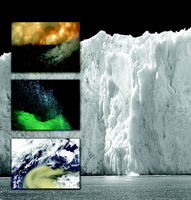
image_miniPNAS Cover image. Images: glacier courtesy of Ulrich Heim (Luebeck, Germany), methane bubbles courtesy of Alfred Wegener Institute, dust cloud courtesy of NASA, and Amazon rainforest courtesy of Greenpeace
This Special Feature of one of the leading research journals in the world was designed and edited by Hans Joachim Schellnhuber of the Potsdam Institute for Climate Impact Research (PIK). It is meant to make a major contribution to the emerging field of sustainability science. The authors involved analyse altogether eight Earth System components. Three of them, the biggest dust source on our planet, oceanic biogeochemical cycles, and marine methane hydrates, are discussed in depth as potential tipping elements for the first time ever.

“It is the cardinal question of Earth System and sustainability science whether global warming actually triggers singular transformations of crucial components of the planetary machinery,” says Schellnhuber. Singular transformations – as opposed to smooth linear and nonlinear ones – would dramatically alter the environment in which human civilisations have developed and thrived over many millennia. “Currently, the climate system still operates in the Holocene mode, but the research presented here underlines that a rise of the global mean temperature beyond two degrees Celsius might push the world into singular-change terrain and therefore needs to be avoided,” Schellnhuber adds.

The PIK scientist has introduced the tipping-elements concept into the research community some ten years ago. It describes components of the Earth System that could be pushed past critical thresholds by anthropogenic forcing, so that they may “tip” into qualitatively different modes of operation. In a recent seminal paper, Tim Lenton from the University of East Anglia, Hans Joachim Schellnhuber and an international group of colleagues presented a formal definition and compiled a short-list of the nine tipping elements ranked as the most policy-relevant (see related Press Release). The current Special Feature examines five of these in much more depth: the El Niño/Southern Oscillation phenomenon, Arctic sea-ice and the great polar ice sheets, the Amazon rainforest, the major monsoon systems, and the circulation of ocean currents in the Atlantic Ocean.

In their article, Matthias Hofmann and Stefan Rahmstorf, also from PIK, discuss the last topic, i.e. the stability properties of the Atlantic Meridional Overturning Circulation (AMOC). The authors present new model simulations of the AMOC response to increased freshwater inflow into the North Atlantic. These challenge the hypothesis that the resulting circulation weakening and the possibility of abrupt oceanic change are just artefacts arising from model flaws. Rather, improving the physical realism of the model leads to a greater vulnerability of the projected AMOC stability.

A group of PIK scientists led by Anders Levermann show that every monsoon circulation inherently bears the possibility of an abrupt collapse. The reason is the moisture-advection feedback which is the core of any monsoon system and was captured in a conceptual model by the authors. The monsoon rains are essential for agriculture as the source of livelihood for several hundred million people in the pertinent regions, the authors state (see related Press Release).

David Archer from the University of Chicago and his co-authors provide evidence that methane hydrates in ocean sediments should be regarded as a “slow tipping element” in the Earth’s climate system. Global warming of some 3 °C could lead to the escape of more than half of the relevant methane stocks, estimated 940 billion tons of carbon, on a millennial time-scale. This hydrate leakage could cause an additional rise in planetary temperature by 0.5 °C. The authors tie this increase in global mean temperature to the methane, but it would persist through many millennia because methane is oxidised in about a decade to carbon dioxide, which continues to impact climate for many millennia.

Ulf Riebesell and colleagues from the Leibniz Institute of Marine Sciences (IFM-GEOMAR) describe the oceans as a climate-system component which is presently undergoing major changes. The sea is not only warming, it is also becoming more acidic. Unbridled anthropogenic emissions of greenhouse gases could alter the cycling of carbon and nutrients in the surface ocean and might damage entire marine ecosystems. The authors conclude that the current level of knowledge allows no clear answer on whether tipping points in the marine ecosphere exist, but they regard some of the projected shifts in oceanic biogeochemistry and their impacts as severe.

Mojib Latif and Noel Keenlyside, also of IFM-GEOMAR, present a review of the complicated mechanisms ruling the El Niño/Southern Oscillation (ENSO) phenomenon. It leads to strong temperature and precipitation fluctuations in the Equatorial Pacific from one year to another and has widespread effects on the global climate system. However, current climate models cannot capture the potential tipping point behaviour of the ENSO phenomenon, the authors resume. Given the potentially huge impacts on biological, chemical and socio-economic systems, the question whether global warming will fundamentally alter the ENSO dynamics in the future has to be investigated further.
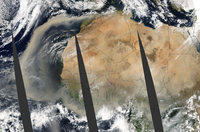
image_mini2Tipping element Bodélé Depression: The immense dust storm was imaged in a series of overpasses by the NASA’s Aqua satellite. Image courtesy Jacques Descloitres, MODIS Rapid Response Team, NASA-Goddard Space Flight Center
A research team led by Richard Washington from the University of Oxford qualifies the biggest dust source on our planet, the Bodélé Depression in Chad, as a potential tipping element. This area in the southern Sahara releases huge plumes, which carry about 700,000 tons of dust towards the Atlantic and the Amazon basin. The authors explain that the so-deployed mineral aerosols play a vital role in transcontinental climatic and biophysical feedbacks. If regional wind patterns or surface erosivities changed due to anthropogenic interference, the dust export from the Bodélé Depression could be substantially modified at time scales as small as one season.

A research team headed by Yadvinder Malhi, also of the University of Oxford, has employed nineteen different global climate models to investigate, whether climate change could cause a large-scale dieback of Amazonian rainforest. The analysis based on a scenario with continuously increasing global emissions of greenhouse gases over the 21st century suggests that dry season water stress is likely to increase in parts of Amazonia. The researchers provide evidence that the Amazonian rainforest could reveal characteristic properties of a tipping element with the tendency to change into a seasonal forest.

In his paper on potential threshold behaviour of sea-ice and continental ice-sheets, Dirk Notz of the Max Planck Institute for Meteorology concludes that tipping points more likely exist for the loss of the Greenland ice sheet and the West-Antarctic ice sheet than for the loss of Arctic sea-ice, which could recover rapidly in a cooler climate. Inland ice could be much more vulnerable to regional warming due to the lack of large internal stabilizing feedbacks as existing for the Arctic sea-ice dynamics. Melting of the continental ice-sheets could lead to rapid multi-meter rise in mean sea level over the coming centuries.

Finally, Nobel Laureate Mario Molina and his co-authors demand fast action from political and economic decision makers to avoid activation of tipping elements. They propose to strengthen the Montreal Protocol regarding substances that have high global-warming potentials. In particular, the scientists make strong cases for an accelerated phasing out of hydrochlorofluorocarbons and a massive reduction of the emissions of soot.
“After two decades of failed climate protection since the 1990 IPCC Report it is more doubtful than ever whether society will manage to confine global environmental change to sub-dangerous levels,” says Hans Joachim Schellnhuber. The tipping-elements field is developing quickly into a broad and relevant research frontier domain, but the issues pose tough challenges for contemporary science. Practically none of the planetary cases studied can be either dismissed now – by firmly ruling out a possible anthropogenic triggering of irregular dynamics – or settled by providing reliable estimates for activation temperatures and reaction time scales. “Many of the papers sketch the research way forward, but it seems that we will have to live with at least another decade of tantalising ignorance concerning the most worrying potential impacts of global warming,” says Schellnhuber.

Article: Hans Joachim Schellnhuber (2009) Tipping Elements in Earth Systems Special Feature: Tipping elements in the Earth System. PNAS published online before print December 7, 2009, doi:10.1073/pnas.0911106106

Further reading:
Related Press Release by the Institute for Governance & Sustainable Development http://igsd.org/documents/PR_PNASSpecialFeature_7Dec09.pdf (pdf-file, 67 KB)

Crossing planetary boundaries (irreversible tipping points, or points of no return as James Hansen calls them), Nature study by Rockstrom et al.

23 Sep 2009: Analysis

Provocative New Study Warns of Crossing Planetary Boundaries

The Earth has nine biophysical thresholds beyond which it cannot be pushed without disastrous consequences, the authors of a new paper in the journal Nature report. Ominously, these scientists say, we have already moved past three of these tipping points.

by Carl Zimmer, environment360, September 23, 2009

Human civilization has had a stable childhood. Over the past 10,000 years, as our ancestors invented agriculture and built cities, the Earth remained relatively stable. The average global temperature fluttered slightly, never lurching towards a greenhouse climate or chilling enough to enter a new Ice Age. The pH of the oceans remained steady, providing the right chemical conditions for coral reefs to grow and invertebrates to build shells. Those species, in turn, helped support a stable food web that provided plenty of fish for us humans to catch. The overall stability of the past 10,000 years may have played a big part in humanity’s explosion.

Now, ironically, civilization has become so powerful that it can reshape the planet itself. “We have become a force to contend with at the global level,” as Johan Rockstrom of the Stockholm Resilience Center in Sweden, puts it. Humans have changed the chemistry of Earth’s oceans, turning them acidic. We are shifting the composition of the atmosphere, raising levels of carbon dioxide higher than they’ve been in at least the past 800,000 years."

A number of scientists have warned in recent years that if we keep pushing the planet this way, we will cause sudden, irreversible damage to the systems that made human civilization possible in the first place. Typically, they’ve just focused on one of these tipping points at a time. But in today’s issue of the journal Nature, Rockstrom and 27 of his fellow environmental scientists argue that we have to conceive of many tipping points at once. They propose that humans must keep the planet in what they call a “safe operating space,” inside of which we can thrive. If we push past the boundaries of that space — by wiping out biodiversity, for example, or diverting too much of the world’s freshwater — we risk catastrophe.

Unfortunately, the authors of the Nature paper maintain, we’ve already started pushing out beyond these boundaries without knowing where they actually are. “We’re sitting on top of a mesa right now, and we’re driving around, but we don’t have our lights on and we don’t even have a map,” says Jonathan Foley, a co-author of the new study and the director of the University of Minnesota’s Institute on the Environment. “That’s a dangerous way to move around.”

In their new study, Foley and his colleagues put down stakes to mark where they believe seven of these boundaries lie. By their estimate, we have already pushed beyond three of these boundaries, and are moving quickly toward the other four. “We’re running out of time,” says Rockstrom.

The new paper has already drawn strong reactions from other scientists, some glowing, some harsh. “This kind of work is critically important,” says Christopher Field, the director of the Department of Global Ecology at the Carnegie Institution at Stanford University. “Overall, this is an impressive attempt to define a safety zone.”

But other scientists wonder whether a planetary safety zone is a concept worth bothering with. “I don’t think this is in any way a useful way of thinking about things,” says Stuart Pimm, a conservation biologist at Duke University.

Rockstrom and his colleagues developed the concept of planetary boundaries from earlier work on how natural systems change. Those changes are sometimes gradual, but they can also come in jolts. A lake, for example, can absorb a fair amount of phosphorus from fertilizer runoff
In five areas, the scientists found, the world has not yet reached the danger threshold.
without any sign of change. “You add a little, not much happens,” says Shahid Naeem of Columbia University, who was not involved in the Nature paper. “Add a little more, not much happens. Add a little... then, all of sudden, you add a little more and — boom! — phytoplankton bloom, oxygen depletion, fish die-off, smelliness. Remove the little phosphorus that caused the tipping of the system, and it does not reverse. In fact, you have to go back to much cleaner water than you would have imagined.”

In recent years, some scientists have argued that the entire planet behaves in a similar way. Adding extra greenhouse gases can raise the planet’s temperature in a steady, proportional rate. But there may come a point when the climate will get pushed into a drastically new state. Some climate scientists have argued, for example, that global warming may trigger the runaway collapse of ice sheets in Greenland and Antarctica. Even if we then immediately stopped emitting greenhouse gases, the ice sheets would keep collapsing into the sea. And then we couldn’t do anything to reverse the change. “We don’t know how to refreeze the Greenland ice sheet,” says Rockstrom.

Rockstrom helped organize a workshop in Stockholm in April 2008 where environmental scientists talked about the other possible thresholds that might exist on a global scale. They concluded that there was good evidence for nine kinds of thresholds: climate change, ocean acidity, the ozone layer, freshwater use, the movement of nitrogen and phosphorus, the amount of land used for crops, aerosols (haze and other particles), biodiversity, and chemical pollution.

The scientists then reviewed each of those factors to mark boundaries that the world should not push beyond. “The idea is to say, ‘Let’s put up some guard rails,’” says Robert Costanza of the University of New Hampshire. “Maybe the guard rails are for a slope we could have taken and survived, but maybe not. We owe it to human civilization to be more careful.”

Ultimately, the scientists felt confident in estimating seven boundaries, three of which we have already pushed past. For one thing, they argue, we’ve already put too much carbon dioxide in the atmosphere. James Hansen, a NASA climate scientist and co-author of the Nature paper, has argued that to avoid catastrophic melting of ice sheets, we should keep carbon dioxide levels no higher than 350 parts per million. Before the Industrial Revolution, the concentration was at about 280 parts per million, but today we’re up to 387. In other words, we’ve moved out of the safe operating space — and into risky territory.

The scientists also argue that as we spread fertilizer on farmland and burn coal, we are pumping far too much nitrogen into the environment. Human activity releases 121 million tons of nitrogen, much of which ends up polluting rivers, lakes and oceans and potentially pushing their ecosystems into irreversible changes. At most, the scientists argue, less than 35 million tons of nitrogen would be a safe boundary.

The rate at which species are becoming extinct is also far beyond a safe boundary, according to the scientists. During most of the history of life, species have become extinct at a slow, fairly regular pace. And as old
The concept of boundaries is provocative because it highlights how much scientists don’t yet understand.
species have become extinct, new ones have been evolving. There have been times when many species have become extinct at a much faster rate, and these pulses have sometimes ushered in a global collapse of ecosystems. The authors of the new Nature paper propose that to avoid collapse, the extinction rate cannot rise above 10 times the long-term background rate. Today, however, scientists estimate that the extinction rate is 100 to 1,000 times higher.

In five other areas, the scientists found, we have not yet crossed the boundary into the danger zone. As we release carbon dioxide, for example, some of it goes into the oceans and makes it more acidic. In acidic seawater, coral reefs have a harder time building skeletons, because the minerals they produce for their skeletons quickly dissolve. Invertebrates have the same trouble making shells. According to recent surveys, the ocean is now acidifying 100 times faster than at any time during the past 20 million years. Yet the Nature co-authors estimate that we have not yet reached the point where acidity may cause ecological collapse. But we are close.

While the paper makes for a sobering read, its authors think we should also find some cause for optimism in it. Humanity nearly crossed another threshold by destroying the ozone layer with chlorofluorocarbons. But we recognized the crisis in time and banned chlorofluorocarbons, allowing the ozone layer to slowly recover. If we had waited much longer we might have been too late to do anything. “We were able to avoid a global disaster,” says Rockstrom. He hopes we can do the same again, and keep human civilization from falling off the environmental mesa.

“The authors make a strong case for their selection of key boundaries,” says the Carnegie Institution’s Christopher Field, “and the proposed locations for the boundaries are conceptually reasonable.” Field said he would not be surprised if other researchers argue for shifting the boundaries based on further research. “But most would agree with the general theme that we are pushing very hard on the Earth system, so hard that we should not be surprised if key parts begin to break.”

More from Yale e360

As Climate Warms, Species May Need to Migrate or Perish
With global warming pushing some animals and plants to the brink of extinction, Carl Zimmer writes that conservation biologists are now saying that the only way to save some species may be to move them.

With Temperatures Rising,
Here Comes ‘Global Weirding’

They’re calling it “global weirding” — the way in which rising temperatures are causing species to change their ranges, the timing of their migrations, and the way they interact with other living things. And the implications of all this are only beginning to be understood.
Other researchers agree with the basic concept of the new paper, but question whether we should be trying to pin down planetary boundaries. Michael Mann, a climate scientist at Penn State University, agrees that there probably is a dangerous threshold for climate change, but he thinks that 350 ppm might be too strict a limit. And on a practical level, Mann points out that the policies being considered by the U.S. Congress probably won’t even be able to keep carbon dioxide levels down to 550 ppm in 2100. “I sometimes worry that there is the danger that if we dramatically move the goalposts and argue that 350 ppm must be the stabilization target, policymakers will just throw their hands up in futility,” says Mann, or reach instead for a quick-fix geoengineering scheme, “which frankly terrifies me.”

But some critics question the basic concept itself. “The notion of a single boundary is just devoid of serious content,” says Stuart Pimm. “In what way is an extinction rate 10 times the background rate acceptable?”

One reason that the concept of planetary boundaries is so provocative is that it highlights how much scientists don’t yet understand about the thresholds built into our planet. “I think this is interesting and I’m glad the paper is coming out,” says Naeem, “but it could lead to the false sense that we understand the biosphere better than we do.”

Link:  http://www.e360.yale.edu/content/feature.msp?id=2192

Australian Dept. of Climate Change report: Faster Change & More Serious Risks by Will Steffen

Dorothy Cutting, Director, West Coast Climate Equity, sent the link to this 60-page pdf file, which is a report by the Australian Government Department of Climate Change, entitled:


This is what she had to say:

"This is a stunning report. How unnerving it is to see climate data from a different perspective; there are so many slides so new to me. A picture being well worth what it is, I’m stalled on the shocking image of projected temperature anomalies in France, the Ukraine and the Sahel. I’ve seen the numbers, of course, but this slide gives this data so much more impact."

Page 5, Figure 1c shows sea level rise.

Page 6, Figure 2a shows rising CO2 correlated with decreasing sea ice.

Lots of figures showing increasing temperatures and droughts.

Figure 23 shows the projected summer temperatures for various geographic locations, like Europe and the Ukraine -- not pleasant reading at all.

From page 32:

"Some of the most striking advances in climate change science over the past three to four years have been made by taking a systems perspective, in which interactions among components of the climate system and feedback processes that highlight potentially important second-order effects have been elucidated.
An example is research on the links between climate change and the Hadley Circulation, and the
implications of these links for storm tracks, regional precipitation patterns, and modes of natural variability such as the El Niño – Southern Oscillation (Frierson et al. 2007; Lu et al. 2008; Seidel et al. 2008). Much of this new work points in the same direction – that as the 21st century progresses, system-level effects will increasingly amplify rather than dampen the human
perturbation of the climate system."

Page 33, Figure 37 shows the Northern Hemisphere and geographic concentrations of permafrost -- yikes!

Anyway, my words cannot describe all of the very well-portrayed information in the many figures. The report is highly readable -- just takes a bit to download, but well worth it.

This report tells it all, very clearly.

Dorthe Dahl Jensen, Al Gore call for quick action to slow melting of Arctic

Al Gore Calls For Swift Action On Melting Ice

CBS News Interactive: Global Warming

April 28, 2009, 2:00 p.m. US/Central

OSLO, Norway (AP) ―Al Gore said Tuesday the world must act quickly to slow the melting of the world's polar ice packs and glaciers before it reaches a critical rate for global warming.

"We have to act and we have to act quickly because we don't want to cross this tipping point," the Nobel peace laureate and former U.S. vice president told a meeting of foreign ministers, experts and scientists from the most affected countries.

The meeting, called "Melting Ice Regional Dramas, Global Wake-Up Call" was held the day before a meeting of the Arctic Council of foreign ministers. The council members are the United States, Russia, Canada, Sweden, Denmark, Finland, Iceland and Norway.

Dorthe Dahl Jensen, an expert from Denmark's Niels Bohr Institute, told the conference in the Arctic town of Tromsoe that the need for a wake-up call was genuine for the polar and glacial regions.

"Antarctica and Greenland have been sleeping until now," she said. "Now they are awakening giants."

She said if Greenland's ice sheet melted, sea levels would rise by 7 meters (23 feet). If Antarctica melted, the rise would be up to 70 meters (230 feet), she said.

Gore, who shared the 2007 Nobel Peace Prize in Oslo for his campaign to draw attention to global warming, said there was a danger of permafrost melting. He said that would thaw vast amounts of organic matter that microorganisms would then turn into climate damaging methane gas, doubling current levels of climate gases.

"As difficult as this challenge is to solve now, it would be twice as difficult if you waited until this (permafrost) thawed," he said.

Gore said carbon dioxide and methane remain the greatest challenges, but that another pollutant, black carbon — or soot — from diesel engines and fires also is a threat. It blackens snow and ice, trapping heat and accelerating the melt.

However, Norwegian Foreign Minister Jonas Gahr Stoere, who co-hosted the meeting with Gore, said soot could be reduced quickly and regionally.

"It might give regions of ice and snow a chance to survive long enough for greenhouse gas reductions to have an impact," Stoere said.

Stoere said the Tromsoe meetings were setting up a scientific task force to draft a report on the melting of ice globally to the U.N. climate change conference in Copenhagen in December.

Link to article: http://cbs2chicago.com/politics/gore.melting.ice.2.996682.html

Arctic sea ice shrinkage, Arctic amplification, Greenland ice sheet mass trend

from the goose-lane.com blog, March 19, 2009

Arctic sea ice shrinkage


Very substantial decrease in Arctic Sea ice in 2007 from 2005 and also from 1979-2000 average


Greenland Ice Sheet Mass Trend


Arctic Temperature Trend 1987-2007

Arctic shrinkage is the shrinkage of the Arctic region (as marked by isotherms), due to changes in the regional climate. Effects of Arctic shrinkage include melting permafrost, leading to Arctic methane release, a marked decrease in Arctic sea ice and the observed increase in melt on the Greenland Ice Sheet in recent years. Whilst there is a periodic variation in sea-ice extent due to the Arctic oscillation, among other varying factors, there is a long-term negative trend in recent years, attributed to global warming. (It is notable that the Arctic oscillation itself is believed to be affected strongly by global warming.)

The Arctic also stores vast quantities of methane, a potent greenhouse gas in permafrost and clathrates. Arctic methane release is accelerating rapidly due to Arctic shrinkage. This has the potential to create a runaway climate change event, which may have features in common with the Great dying (a mass extinction), and with the Paleocene-Eocene thermal maximum (an abrupt climate change event), although both of these took place in a climate much warmer than today’s. It has also been suggested that there could be a shutdown of thermohaline circulation, similar to that which is believed to have driven the Younger Dryas, an abrupt climate change event. This is now thought unlikely in the near future. There is also potentially a possibility of a more general disruption of ocean circulation, which may lead to an ocean anoxic event, although these are believed to be much more common in the distant past. It is unclear whether the appropriate pre-conditions for such an event exist today.

Computer models predict that the sea ice area will continue to shrink in the future, though there is no consensus on when the Arctic Ocean might become ice-free in summer. Current climate models frequently underestimate the rate of shrinkage. In 2007 the IPCC reported that “the projected reduction is accelerated in the Arctic, where some models project summer sea ice cover to disappear entirely in the high-emission A2 scenario in the latter part of the 21st century.? There is currently no scientific evidence that a seasonally ice-free Arctic Ocean existed anytime in the last 700,000 years, although there were periods when the Arctic was warmer than it is today. Scientists are studying possible causal factors such as direct changes resulting from the greenhouse effect as well as indirect changes such as unusual wind patterns, rising Arctic temperatures, or shifting water circulation (such as increasing inflows of warm, fresh water to the Arctic Ocean from rivers.)

According to the Intergovernmental Panel on Climate Change, “warming in the Arctic, as indicated by daily maximum and minimum temperatures, has been as great as in any other part of the world.” Reduction of the area of Arctic sea ice means less solar energy is reflected back into space, thus accelerating the reduction.

The lowest extent of sea ice was in 2007; that of 2008 was slightly greater The area covered at a particular time is what determines the albedo of the Arctic region and thus has an important effect on future warming (or cooling) trends through ice-albedo feedback.

Sea ice may reach a tipping point and then be lost. The loss of the Arctic sea ice may represent a tipping point in global warming, when ‘runaway’ climate change starts. This is due to the release of methane from permafrost and clathrates in the region, and also because of ice-albedo feedback effects. Recent research, however, has challenged the notion of an imminent Arctic sea ice tipping point.

Several specific Arctic geoengineering schemes have been proposed to reduce Arctic Shrinkage. Further, scientists such as Paul Crutzen have argued for general geoengineering proposals such as using stratospheric sulfur aerosols to be used, which will affect the Arctic if deployed in or near this region.

Link to article: http://goose-lane.com/?p=1382

M.C.A. Senna, M.H. Costa & G.F. Pires, JGR, Vegetation-atmosphere-soil nutrient feedbacks in the Amazon for different deforestation scenarios

Journal of Geophysical Research, 114; D04104, doi:10.1029/2008JD010401

Vegetation-atmosphere-soil nutrient feedbacks in the Amazon for different deforestation scenarios

Mônica Carneiro Alves Senna, Marcos Heil Costa, and Gabrielle Ferreira Pires

(Department of Agricultural and Environmental Engineering, Federal University of Viçosa, Viçosa, Brazil)

Abstract

In recent decades, large areas of the Amazon forest have been deforested and the rainforest's future may be dependent on climate and soil nutrient feedbacks associated with deforestation. This is a two-way biosphere-atmosphere interaction problem: the response of the regional climate system to the land cover varies with the forest growth, which, in turn, depends on climate and nutrient stress. Nutrient stress also varies with forest age, being most severe for young forests and declining as forests mature. Here we use a coupled climate-biosphere model to investigate how these feedbacks interact to control the secondary forest recovery after different deforestation scenarios, looking for a threshold of deforestation that could cause dangerous interference on the Amazon recovery. Results show that the reduction in rainfall is proportional to the amount of deforestation and is more drastic when the deforested area is higher than 40% of the original forest extent. In addition, this simulated precipitation reduction alone is not sufficient to prevent the rainforest regrowth. However, when the precipitation reduction is associated with a soil nutrient stress, a savannization process may start over southern Amazonia (northern Mato Grosso state), no matter how much is deforested. In this region, a large precipitation reduction in the transition from the dry to the rainy season and an increase in the dry season duration are favorable to the savanna maintenance on nutrient-limited simulations. These results may be a valuable tool for prioritizing forest conservation in this region, which presently has the highest clearing rate in Amazonia.

(Received 11 May 2008, accepted 4 December 2008, published 18 February 2009.)

Senna, M. C. A., M. H. Costa, & G. F. Pires (2009), Vegetation-atmosphere-soil nutrient feedbacks in the Amazon for different deforestation scenarios, J. Geophys. Res., 114, D04104, doi:10.1029/2008JD010401.

Link to abstract: http://www.agu.org/pubs/crossref/2009/2008JD010401.shtml

M. C. A. Senna et al., Parts of Amazon close to tipping point

Parts of Amazon close to tipping point

The Mato Grosso, the most scarred region of the Amazon rainforest, is teetering on a deforestation "tipping point," and may soon be on a one-way route to becoming a dry and relatively barren savannah.

Mônica Carneiro Alves Senna and colleagues at the Federal University of Viçosa, Brazil, used computer models to simulate how the Amazon would recover from various amounts of deforestation. Their simulations ranged from a complete wipe-out of the entire forest to a situation where just one fifth of the forest would be removed.

Previous studies have shown that cutting trees has a double effect on the forest's recovery. Fewer trees means less rain -- because rainclouds are more likely to form above moist forests.

It also leads to poorer quality soil, as most of the Amazon's nutrients come from decaying vegetation, explains Yadvinder Malhi of the University of Oxford. "By removing the forest you remove the nutrients," he says.

Rain makers

Both of these conditions make it more difficult for trees to grow back, and can change the lush tropical forest to other landscapes, such as a seasonal forest -- or even dry savannah.

Senna and colleagues confirmed that getting rid of any amount of trees would reduce the amount of annual rainfall. With 20% deforested region, on average, 0.5 mm less rain fell per day than in a fully forested region. Beyond 40% of deforestation, the reduction in precipitation was more severe -- 1 mm less per day than a fully forested region.

In all cases, rainfall eventually returned to current levels after 50 years, but the forest did not return to its original state.

In their models, the researchers did not assume that the forest would be left alone after a certain level of deforestation was reached. Instead, clearing activities continued at current rates and planned road projects were carried out. The point of the study was to see if there were any critical "tipping points" beyond which the forest could not recover.

Treeless landscape

When Senna and colleagues integrated a loss of soil quality into their models, the change was much more profound.

The Mato Grosso region in the southern Amazon -- an area more than twice the size of California -- experienced irreversible effects with a relatively small drop in forested regions. Already, about 17% of this region's forest has been cleared. When the team simulated 20% deforestation, Senna found that northern Mato Grosso was not able to recover its forested state even after 50 years. Instead, it became a dry, bare savannah.

Senna's simulation may even be optimistic. Her modelling does not take into account the effect of climate change, which recent studies have shown could turn the Amazon into a tinderbox, more vulnerable to fires.

Journal reference: Journal of Geophysical Research (DOI: 10.1029/2008JD010401)

Link to New Scientist article: http://www.newscientist.com/article/dn16708-parts-of-amazon-close-to-tipping-point.html

IPY 2007-2008 Report: Western Antarctic (WAIS) Pine Island and Smith glaciers melting much faster than thought, contributing to sea level rise

Study: Antarctic glaciers slipping swiftly seaward

February 25th, 2009 By ELIANE ENGELER , physorg.com, Associated Press Writer in Space & Earth science / Environment

(AP) -- Antarctic glaciers are melting faster than previously thought, which could lead to an unprecedented rise in sea levels, scientists said Wednesday.

A report by thousands of scientists for the 2007-2008 International Polar Year concluded that the western part of the continent is warming up, not just the Antarctic Peninsula.

Previously most of the warming was thought to occur on the narrow stretch pointing toward South America, said Colin Summerhayes, executive director of the Britain-based Scientific Committee on Antarctic Research and a member of International Polar Year's steering committee.

Satellite data and automated weather stations indicate that "the warming we see in the peninsula also extends all the way down to what is called west Antarctica," he told The Associated Press. "That's unusual and unexpected."

During the International Polar Year, thousands of scientists from more than 60 countries engaged in intense Arctic and Antarctic research over the past two southern summer seasons -- on the ice, at sea, and via icebreaker, submarine and surveillance satellite.

The biggest western Antarctic glacier, the Pine Island Glacier, is moving 40% faster than it was in the 1970s, discharging water and ice more rapidly into the ocean, Summerhayes said.

The Smith Glacier, also in western Antarctica, is moving 83% faster than it did in 1992, he said.

All the glaciers in the area together lose a total of around 114 billion tons per year because the discharge is much greater than the new snowfall, Summerhayes said.

"That's equivalent to the current mass loss from the whole of the Greenland ice sheet," he said, adding that the glaciers' discharge was making a significant contribution to the rise in sea levels. "We didn't realize it was moving that fast."

Antarctica's average annual temperature has increased by about 1 °F since 1957, but is still 50 °F below zero, according to a recent study by Eric Steig of the University of Washington.

Summerhayes said the glaciers were slipping into the sea faster because the floating ice shelf that would stop them -- usually 656-984 feet thick -- is melting.

Sea levels will rise faster than predicted by the Intergovernmental Panel on Climate Change, Summerhayes said.

An IPCC panel in 2007 predicted warmer temperatures could raise sea levels by 30-50 inches this century, which could flood low-lying areas and force millions to flee.

"If the west Antarctica sheet collapses, then we're looking at a sea level rise of between 1 meter and 1.5 meters (approximately 3 to 5 feet)," Summerhayes said.

The IPY researchers found that the southern ocean around Antarctica has warmed about 0.36 °F in the past decade, double the average warming of the rest of the Earth's oceans over the past 30 years, he said.

The warming of western Antarctica is a real concern Summerhayes said. "There're some people who fear that this is the first signs of an incipient collapse of the west Antarctic ice sheet."

Link to article: http://www.physorg.com/news154766458.html

Timothy M. Lenton et al., PNAS, 105 (6): Tipping elements (large-scale components that may pass a tipping point) in the Earth's climate system

Published online before print February 7, 2008; doi: 10.1073/pnas.0705414105
Proceedings of the National Academy of Sciences, February 12, 2008, Vol. 105, No. 6, 1786-179.

Tipping elements in the Earth's climate system

  1. Timothy M. Lenton*,†,
  2. Hermann Held‡,
  3. Elmar Kriegler‡,§,
  4. Jim W. Hall,
  5. Wolfgang Lucht‡,
  6. Stefan Rahmstorf‡, and
  7. Hans Joachim Schellnhuber†,‡,‖,**
  1. *School of Environmental Sciences, University of East Anglia, and Tyndall Centre for Climate Change Research, Norwich NR4 7TJ, United Kingdom
  2. ‡Potsdam Institute for Climate Impact Research, P.O. Box 60 12 03, 14412 Potsdam, German
  3. §Department of Engineering and Public Policy, Carnegie Mellon University, Pittsburgh, PA 15213-3890
  4. School of Civil Engineering and Geosciences, Newcastle University, and Tyndall Centre for Climate Change Research, Newcastle NE1 7RU, United Kingdom
  5. ‖Environmental Change Institute, Oxford University, and Tyndall Centre for Climate Change Research, Oxford OX1 3QY, United Kingdom
  1. Edited by William C. Clark, Harvard University, Cambridge, MA, and approved November 21, 2007 (received for review June 8, 2007)

Abstract

The term “tipping point” commonly refers to a critical threshold at which a tiny perturbation can qualitatively alter the state or development of a system. Here we introduce the term “tipping element” to describe large-scale components of the Earth system that may pass a tipping point. We critically evaluate potential policy-relevant tipping elements in the climate system under anthropogenic forcing, drawing on the pertinent literature and a recent international workshop to compile a short list, and we assess where their tipping points lie. An expert elicitation is used to help rank their sensitivity to global warming and the uncertainty about the underlying physical mechanisms. Then we explain how, in principle, early warning systems could be established to detect the proximity of some tipping points.

  • †To whom correspondence may be addressed. e-mail: t.lenton@uea.ac.uk or john@pik-potsdam.de
  • ↵**This contribution is part of the special series of Inaugural Articles by members of the National Academy of Sciences elected on May 3, 2005.

  • Author contributions: T.M.L., H.H., E.K., J.W.H., and H.J.S. designed research; T.M.L., H.H., E.K., J.W.H., W.L., S.R., and H.J.S. performed research; T.M.L., H.H., E.K., and J.W.H. analyzed data; and T.M.L., H.H., E.K., and H.J.S. wrote the paper. The authors declare no conflict of interest. This article is a PNAS Direct Submission. This article contains supporting information online at www.pnas.org/cgi/content/full/0705414105/DC1. Freely available online through the PNAS open-access option.

  • © 2008 by The National Academy of Sciences of the USA

Link to abstract: http://www.pnas.org/content/105/6/1786.abstract

Link to complete open-access paper: http://www.pnas.org/content/105/6/1786.full.pdf+html